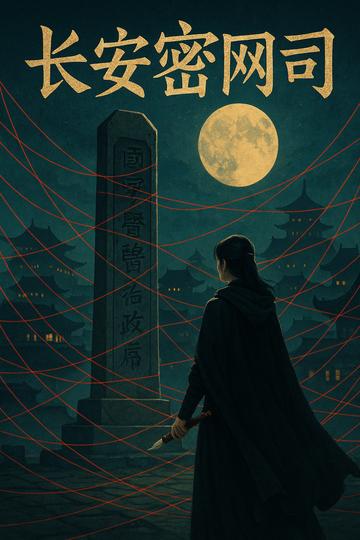
At the height of the Tang dynasty, a secret bureau was established: the Secret Web Office.
Whether it was tales of haunted towers or rumors about changing fate, anything that could affect “the nation’s destiny” fell under its jurisdiction. Wen Tong was a junior female clerk who drafted edicts, but she had a natural ability to see “the cause and effect behind words”: at a glance, she could tell whom a forged decree would harm, which province a line of poetry would send to war, and which year’s history a single line of inscription would rewrite.
So she was tossed into the Secret Web Office, where she began a career devoted to stamping out rebellion “waged with words”:
A new song in a pleasure house secretly promotes the “art of replacing the ruler”? Tear it apart.
Tiny print in an almanac urges people to believe that “the foundations of fate are loose and the nation’s destiny can be changed”? Burn it.
A lecture in the borderlands uses her name to incite an uprising? Smash it.
Someone secretly carves “Guard this one heart with care, replace this one ruler” onto the original Taiji stele at night?
She simply erects a “Verdict Stele” beside it and publicly shreds those eight characters to pieces.
The Binding Strategy explains “how to usurp the nation’s destiny.” The Countering Strategy explains “how to dismantle methods for usurping the nation’s destiny.”
Some want to use her Countering Strategy to overthrow the emperor. Others want to carve her name into the stele and make her take the blame.
Wen Tong does only one thing:
If you have the nerve, rebel with a blade. Don’t try to fool people with words.
Her specialty is putting an end to this path of “usurping the nation through writing.”
A period mystery with court intrigue, spy warfare, and a literary path to power.
She sees the cause and effect at a glance, and writes herself into the history books with a single stroke.