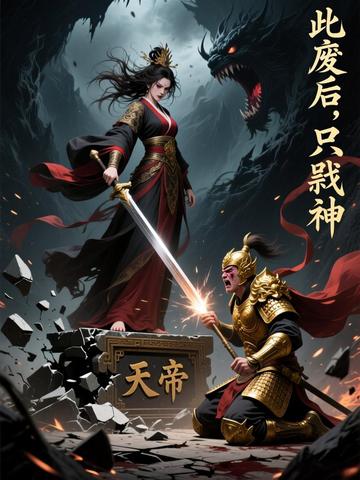
She, Chu Qinghuang, the deposed queen of the Dashuo Dynasty, had her heart cut out and sacrificed by the scumbag emperor and Green Tea Sister, and her body was abandoned in a mass grave.
Everyone laughs at her for her wishful thinking, and she deserves to be reduced to a stepping stone for the emperor's schemes.
Little did she know that what she was carrying was not an extraordinary bone, but the Nirvana Godhead of the last ancient protoss!
When the body dies and the soul disappears, God comes to the world!
When she opened her eyes again, she climbed out of the coffin. She controlled ghosts with her left eye and channeled spirits with her right eye. She vowed to turn this hypocritical dynasty upside down!
The scumbag emperor wants to use her destiny to extend his life and ascend to the throne? Drain his dragon energy with your backhand!
Sister Bai Lian wants to replace her as the daughter of destiny? Reveal her pseudo-god bloodline on the spot!
When Chu Qinghuang stepped on the divine beast and held the magic sword to fight back to the Jinluan Palace, the betrayed man knelt at his feet and begged for mercy with a trembling voice: "Huang'er, I am willing to offer you thousands of miles of mountains and rivers as my betrothal, please come back!"
Chu Qinghuang's red lips curled up slightly, and the tip of her sword lifted his chin: "I am back, and I will not take the throne..."
"Just to kill the gods."
Reader comments
This is a masterpiece that blossoms with strange thoughts within the traditional fairy tale framework. The most touching thing about it is not the protagonist Chu Qinghuang's destructive power, but her ultimate sobriety and humility of "not being a righteous person, but just being a watcher". The novel sublimates the theme of "killing gods" from revenge to a profound reflection on the sovereignty of destiny - true power is not to become a new rule-maker, but to give every mortal the right to break free from the shackles and write his own legend. The plain return of "cleaning up the stall" at the end forms a subtle contrast with the heroic sacrifice of "incarnation of chaos", with a long aftertaste. This is not only a story about revenge and redemption, but also a noble tribute to the autonomy of life.
This is a masterpiece that blossoms with strange thoughts within the traditional fairy tale framework. The most touching thing about it is not the protagonist Chu Qinghuang's destructive power, but her ultimate sobriety and humility of "not being a righteous person, but just being a watcher". The novel sublimates the theme of "killing gods" from revenge to a profound reflection on the sovereignty of destiny - true power is not to become a new rule-maker, but to give every mortal the right to break free from the shackles and write his own legend. The plain return of "cleaning up the stall" at the end forms a subtle contrast with the heroic sacrifice of "incarnation of chaos", with a long aftertaste. This is not only a story about revenge and redemption, but also a noble tribute to the autonomy of life.