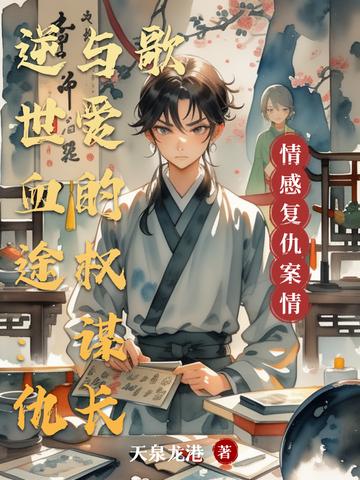
As I wrote Against the Tide of Blood, I sat in my room racking my brain over the outline. One scene kept flashing through my mind: a snowy night, blazing fire, and the “Might Shakes Mountains and Rivers” plaque smashed to pieces. At that moment, I knew I wasn't the author writing a story. The story was putting me on trial:
“If your whole family is slaughtered, your name is stained with a false accusation, and all you have left is a blade thinner than paper, how will you clear your name?”
So I brought Chu Yichen (or rather, Lin Dan) back to life in the mortuary. He speaks for the dead, and for me too. He cuts open corpses with a scalpel; I cut into the festering sores of an era with my keyboard. Each of us carries a blade, each keeps watch through the dark, and each waits for the moment “Shatterbloom” rises into the world again. It is both poison and key, a flaw left behind by an enemy and the last chance of survival for those who made it through.
When writing political intrigue, I dare not give my hero a “guaranteed victory” golden finger. I write only choices that are “guaranteed to hurt.”
When writing love, I dare not write “fated” doting romance. I write a gaze exchanged with life hanging by a thread. In a courtyard where the stench of corpses mingles with the scent of plum blossoms, someone foretells death with a stick of incense, while someone else fends off murderous intent with half a cup of cold tea.
When writing revenge, I dare not write a wish-fulfillment tale of “vengeance achieved.” I write the long years of a “great injustice left unavenged,” because a true miscarriage of justice is never about killing an enemy with one stroke. It's about carving yourself to pieces, one cut at a time.