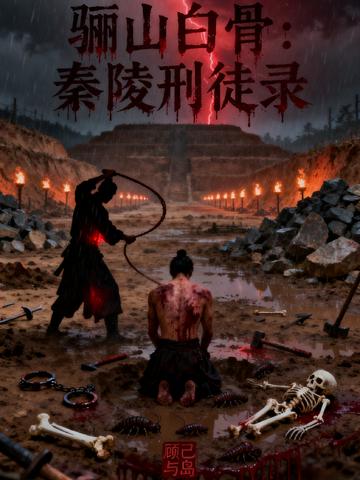
When modern archaeological researcher Ying Che opened his eyes, he found that he had actually traveled through time and became a prisoner in the Lishan Mausoleum of the Qin Dynasty. Under his feet was the rammed earth of the unfinished underground palace, in his ears was the whistling of the supervisor's iron whip, and in front of him were countless lives that were withering like grass. This underground empire, which carried the immortal dream of the First Emperor, was originally built with numerous bones and blood and tears.
He witnessed the death of a child under the ominous sign of "Yinghuo Shou Xin", witnessed the silent decomposition of prisoners when mercury was poured into them, witnessed the strange ritual of the magician using sheep blood to calm the water monster, and also hid the map of the secret passage of the mausoleum drawn by Mr. Mo. When modern scientific understanding collided with the superstition of alchemy in the Qin Dynasty, and when the reverence for life faced the cruelty of imperial power, Yingche was no longer a bystander: he used the "triangular support" principle to strengthen the wooden frame of the underground palace, used mugwort to alleviate the epidemic in the camp, and even took risks and conspired to rescue prisoners who were about to be buried alive, trying to carve a way out for himself and those around him in this huge tomb that swallowed human lives.
The wind and snow of Lishan Mountain have buried countless innocent souls, and the underground rivers of the underground palace are filled with unknown dangers. Yingche gradually discovers that the secrets of Qin Ling are far more than the luxury of "using mercury as a hundred rivers" - the craftsmen who were buried alive, the bloodshot threads carved into the pottery figurines, and the strange black shadows of the tomb-guarding beasts all seem to point to a more terrifying truth. In this battle between life and death, he not only has to fight against the harsh Qin laws and greedy overseers, but also faces the collision of ancient and modern cognitions, the struggle of human nature, and the blood and absurdity of an era behind this immortal tomb.