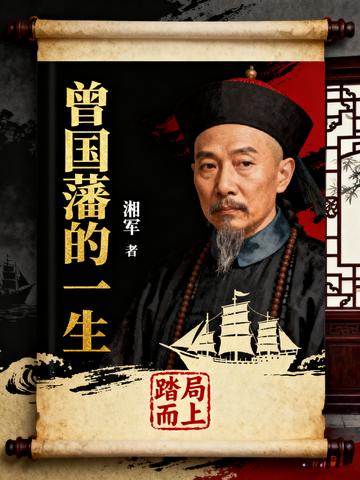
Zeng Guofan (November 26, 1811 - March 12, 1872), whose original name was Zicheng, courtesy name Bohan, and nickname Disheng, was a native of Xiangxiang, Hunan. He was a politician, strategist, Neo-Confucianist, and litterateur in the late Qing Dynasty. Together with Li Hongzhang, Zuo Zongtang, and Zhang Zhidong, he was known as one of the "Four Famous Officials of the Late Qing Dynasty and the Zhongxing Dynasty."
Zeng Guofan was born in an ordinary farming and reading family. He was diligent and studious since he was a child. He entered a private school at the age of 6 and was able to read four books and recite the Five Classics at the age of 8. In the 18th year of Daoguang's reign (1838), he passed the Jinshi examination and entered the Hanlin Academy. He later became a bachelor of the cabinet, a minister of the Ministry of Rites, and a minister of the Ministry of Military Affairs, Industry, Punishment, and Officials.
In the second year of Xianfeng (1852), when Zeng Guofan returned to his hometown of Dingyou, he was ordered to set up regiment training in his hometown and form the Hunan Army. He led the Hunan Army to fight against the Taiping Army. After many victories and defeats, he finally captured Tianjing in the third year of Tongzhi (1864) and put down the Taiping Rebellion. For his first contribution, he was named "Yiyong" Marquis and remained as the governor of Liangjiang. After that, he was also ordered to go to Shandong area to encircle and suppress the Nien Army, but the results were not good.
Zeng Guofan was also one of the initiators of the Westernization Movement. He founded the Anqing Ordnance Institute, founded the Jiangnan Manufacturing Bureau with Li Hongzhang, and also selected the first batch of students to study in the United States. In the ninth year of Tongzhi (1870), Zeng Guofan flirted with foreigners and remnant people while handling the Tianjin religious case. He was condemned by public opinion and returned as governor of Liangjiang. Two years later, he died in Nanjing. The Qing government posthumously awarded him the posthumous title "Wenzheng" as Taifu.
Zeng Guofan believed in Cheng-Zhu Neo-Confucianism and wrote "The Family Letter of Zeng Wenzhenggong" and "The Complete Works of Zeng Wenzhenggong". His thoughts on family governance, scholarship, and conduct in society had a profound impact on later generations.