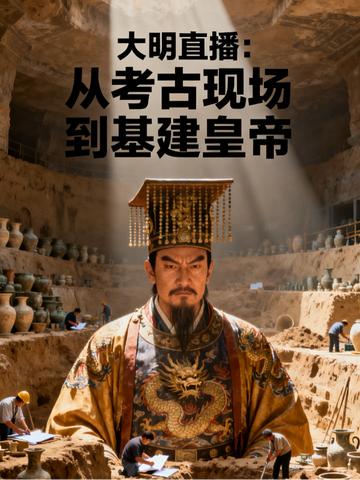
Archaeological assistant Chen Zhao traveled to Hongwu for three years and became a refugee due to a vision in an ancient tomb. He only has a mobile phone that can open a "cross-time and space live broadcast room" and an "infrastructure mall" - the audience's emotions are turned into points, which can be exchanged for food supplies and technical drawings.
Faced with drought-stricken refugees and barren land, he used his points to build houses, dig ditches, improve farm tools, and use modern knowledge to teach villagers to compost compost and grow food. From rescuing a village to helping Nanjing Prefecture control locusts, to building cement roads for Yingtian Prefecture, he gradually spread the seeds of infrastructure construction in the Ming Dynasty.
The audience in the live broadcast room is his think tank across time and space. The modern archaeological team uses the live broadcast to excavate the relics he left behind. Zhu Yuanzhang's trust, court games and clues from the Mufu tomb allow him to move forward step by step between building the Ming Dynasty and protecting history. In the end, steam pumps were running on the Yellow River, and movable type printing spread agricultural books. He single-handedly used modern wisdom to illuminate the people's livelihood in Hongwu, creating an infrastructure legend that spans time and space.