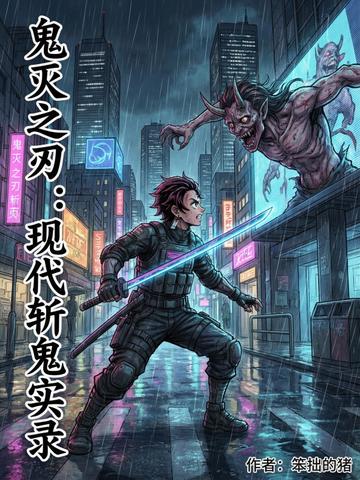
After staying up all night to finish the reboot of Demon Slayer, I let out a long sigh about how tragic the protagonist’s life was. When I woke up, I found myself lying in the middle of a rain-soaked road, my chest torn open. Nearby was an overturned police car, and a “demon” straight out of the anime.
Bullets could pierce its body, but they couldn’t kill it.
Then a middle-aged man rushed through the cordon, drew a dark, ancient blade, and quietly uttered three words:
Water Breathing.
When I opened my eyes again, I had become Kamado Ryota, a descendant of a fallen demon-slaying family.
In this world, Demon Slayer is just a hugely popular anime.
Real demons are passed off as cases of mental illness, terrorist attacks, and urban legends;
The real Demon Slayer Corps has dwindled to a handful of ancient families, mocked as “chuunibyou.”
Worse still
The cult that stole Muzan’s remains has spent a century or two
infiltrating the financial elite, politics, and top medical circles, mass-producing new demons and half-demons under the guise of “regenerative medicine” and “longevity programs.”
As someone who transmigrated here, I have a little “inside knowledge” from the original story,
and the last Nichirin Blade of the Kamado family at my back.
Caught between the neon lights and blood-soaked rain of the modern city, I’m forced to restart a real-life Demon Slayer.
This time,
I don’t want to be a spectator anymore.