Synopsis
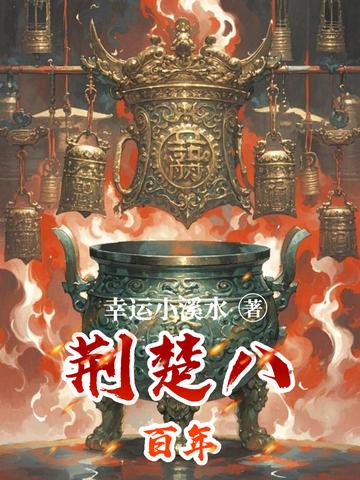
The Eight-Hundred Years of Jingchu is an epic spanning nearly five hundred chapters, offering the first sweeping, panoramic account of the Chu state’s eight-hundred-year journey from its founding to its fall.
The story begins in the era of King Cheng of Zhou, when Xiong Yi was granted lands as a viscount and established his capital at Danyang. From then on, the people of Chu “blazed a trail through the wilderness, opening up the forests” as they struggled to make a home in the Jianghan region. After generations of effort, Xiong Tong declared himself King Wu, and Chu began to show its strength. Then King Wen moved the capital to Ying, King Cheng competed for supremacy in the Central Plains, and King Zhuang “astonished the world with a single cry,” challenging the Zhou royal house and building a hegemony that brought Chu to its height.
But after reaching its peak, the state began to decline, and this epic also explores the shadows of empire. The humiliation of Wu forces capturing Ying and the deep vendetta of desecrated tombs and the scourging of corpses give way to the tale of a kingdom’s desperate revival, brought to life by Shen Baoxu’s loyal weeping before the Qin court. After Chu’s resurgence, Wu Qi’s reforms flashed like a shooting star, lighting the way before vanishing in an instant. In the reigns of Kings Huai and Qingxiang, Qu Yuan wandered along the riverbanks, turning his political ideals into the immortal lament of Li Sao. At last, Bai Qi captured Ying and the ancestral temples were burned. Chu’s final spiritual totem collapsed amid the flames.
Yet the spirit of Chu never died. On this land, the oath that “though only three households of Chu remain, Chu will be the one to destroy Qin” was ultimately fulfilled by Xiang Yu. The courage of his desperate stand at Julu and the sorrow of his farewell to his beloved at Gaixia brought this eight-hundred-year epic to its most tragic close.
This is not only a history of kings and ministers vying for supremacy, but also the story of a civilization’s growth and fusion. The people of Chu blended Huaxia and Miao-Man traditions to create a distinctive culture, rich in shamanic customs and dazzling ideas, with bronze and lacquer craftsmanship that reached the pinnacle of its age. Chu poetry, music, and customs ultimately became deeply embedded in the fabric of Chinese civilization.