In 2075, the gap between the rich and the poor is huge. The "Olympus Club" composed of the top wealthy people creates a "Golden Cage" survival game, using the desperate poor around the world as "players" to start a ten-day journey on a man-made island. Lin Ye, a former mechanical engineer, participated in the competition to save his seriously ill father and find out the truth behind his sister's disappearance. He formed a team with street magician Su Xiao, veteran Zhao Meng, and biologist Dr. Chen. They faced deadly levels such as toxic fog and mechanical mazes, and had to deal with the malicious interference and betrayal of traitors through the "gift cards" and "curse cards" of the rich. As they progressed through the game, they discovered that the game was actually a conspiracy to screen out "high-quality genes." In the end, Lin Ye chose to hijack the live broadcast signal to expose the crime. While destroying the game system, it also revealed the secret connection between the sister's disappearance and the mysterious force.
Reader comments
The novel is a dystopian masterpiece set in the near future. Under the shell of the survival game, there are sharp questions about genetic eugenics, class solidification and human alienation. The author weaves a huge web of conspiracy with a compact breakthrough narrative. The characters' choices in desperate situations shine with the glimmer of humanity, and the final revelation of the truth sublimates this cruel live broadcast into a shocking social fable.
You must work hard
The moment I opened "Golden Cage: Ten Days of Survival Game", I was gripped by the urgency of the ten-day countdown. The game of survival in a closed space is never a simple fight through the barrier, but a profound trial that reveals the underlying nature of human nature and dismantles the shackles of the soul. The author controls the game with precise rhythm, hiding mysteries in every level. From the choice dilemma of the trust test to the binding of memory fragments and survival tasks, every step is to torture the bottom line and obsession of the participants. There is no absolute distinction between good and evil in the book, and each character enters the game with an unreconciled past: the protagonist who is entangled in regrets, the ordinary people who come to find relatives, and the players who hide their selfish intentions. Their choices include the coldness of selfishness and betrayal, but also the glimmer of mutual support in desperate situations. The most exquisite setting lies in the double metaphor of "cage" - the confinement of physical space is easy to break, and the inner obsession and fear are the real shackles, just like the poignant sentence in the book: "The door of the cage is actually unlocked, you threw away the key yourself." The plot with multiple reversals makes people want to stop. There are fatal flaws hidden under the seemingly seamless plan, and crises arise in the short connection between strangers. When the ten-day deadline approaches, the end of survival is no longer escape, but reconciliation with self-regret. This novel not only has the brain-burning pleasure of suspense reasoning, but also has deep thoughts on human nature and redemption. It is suitable for all readers who like immersive survival games and spiritual exploration.
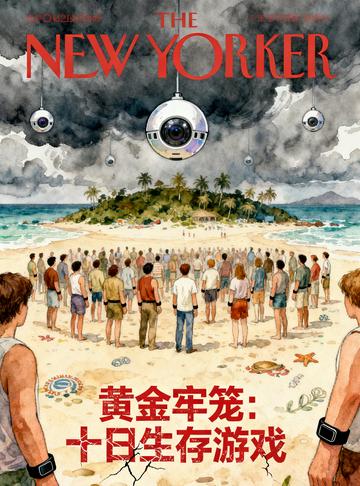
The novel is a dystopian masterpiece set in the near future. Under the shell of the survival game, there are sharp questions about genetic eugenics, class solidification and human alienation. The author weaves a huge web of conspiracy with a compact breakthrough narrative. The characters' choices in desperate situations shine with the glimmer of humanity, and the final revelation of the truth sublimates this cruel live broadcast into a shocking social fable.
You must work hard The moment I opened "Golden Cage: Ten Days of Survival Game", I was gripped by the urgency of the ten-day countdown. The game of survival in a closed space is never a simple fight through the barrier, but a profound trial that reveals the underlying nature of human nature and dismantles the shackles of the soul. The author controls the game with precise rhythm, hiding mysteries in every level. From the choice dilemma of the trust test to the binding of memory fragments and survival tasks, every step is to torture the bottom line and obsession of the participants. There is no absolute distinction between good and evil in the book, and each character enters the game with an unreconciled past: the protagonist who is entangled in regrets, the ordinary people who come to find relatives, and the players who hide their selfish intentions. Their choices include the coldness of selfishness and betrayal, but also the glimmer of mutual support in desperate situations. The most exquisite setting lies in the double metaphor of "cage" - the confinement of physical space is easy to break, and the inner obsession and fear are the real shackles, just like the poignant sentence in the book: "The door of the cage is actually unlocked, you threw away the key yourself." The plot with multiple reversals makes people want to stop. There are fatal flaws hidden under the seemingly seamless plan, and crises arise in the short connection between strangers. When the ten-day deadline approaches, the end of survival is no longer escape, but reconciliation with self-regret. This novel not only has the brain-burning pleasure of suspense reasoning, but also has deep thoughts on human nature and redemption. It is suitable for all readers who like immersive survival games and spiritual exploration.