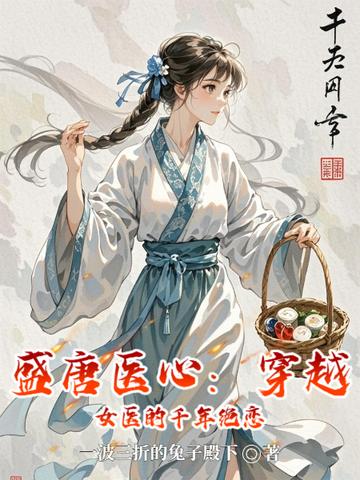
The most touching thing about this book is the "no cheating" hard-core medical treatment. The heroine Lin Wei (Su Qingyuan) has the qualities of a modern medical student to never conjure antibiotics out of thin air. "Golden Finger": To treat acute appendicitis, she relied on palpation to identify symptoms, and used honeysuckle and forsythia to prepare anti-inflammatory prescriptions; to save children who were choking, she used the Heimlich maneuver; to control cholera in the military camp, she first isolated and then boiled drinking water, and used lime to treat pollutants; even smallpox prevention was in line with the times, and she developed cowpox vaccination from the experience of the Western Regions. Every medical scene can withstand scrutiny. It not only understands the logic of modern medicine, but also adapts to the medicinal materials and conditions of the Tang Dynasty. It is both insightful and authentic.
The love in the book is an example of "evenly matched". General Xiao Jingyuan and female doctor Lin Wei have never been a one-way street with "the hero protecting his wife": she went to the palace to defend the doctor and was made things difficult, but he silently stood outside the palace gate and handed over his cloak; she was tired from treating the plague in the Western Regions, and he put aside his military duties to wipe her body and give her medicine; he was framed by the court, and she used the Western Region Covenant to prove his innocence. There was no bloody misunderstanding, only the tacit understanding of "you save the world, and I will protect you" - when she was practicing medicine, he was on the front line blocking knives; when he was guarding the border, she was preparing soup and medicine for his soldiers. This kind of affectionate "independence and mutual support" is gentle and powerful, which makes people yearn for it.
What's even more rare is that the prosperous Tang Dynasty it describes is full of fireworks.