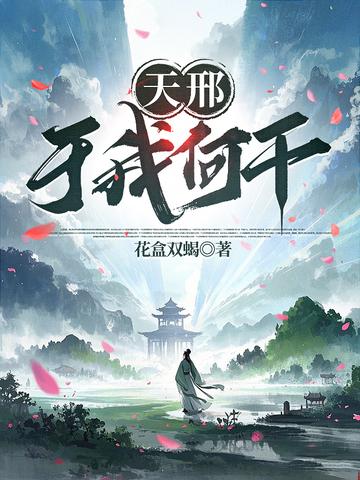
In the sixteenth century, the horn of the dawn of modern times sounded in the west, and the lament of the dusk of the empire echoed in the east. A modern soul falls into the apocalypse and rests in a mortal body. Facing the divergent path of history, can he shoulder the long-cherished wish of hundreds of millions of living beings, and between martyrdom and pioneering, can he rekindle the spark of civilization for the Han family?
————————————————————————
This work takes the growth of local families and protagonists in the late Ming Dynasty as the main line, and immerses the destiny of the fictional family into real history. With "history as the bone and the Red Mansion as a mirror", the melancholy of "ridiculing the Qing Dynasty and mourning the Ming Dynasty" is hidden in the family for a short period of time, unfolding the grand picture from the 45th year of Wanli to the 37th year of Yongli. It uses the cultural pain of "the country can be subjugated, but the world cannot be subjugated" to convey the theme of enlightening the people's wisdom and restoring the voice of the Han Dynasty.
Reader comments
The writing is solid and the conception is unique. The true meaning hidden deep in the book requires careful reading. In this fast-paced society, this kind of writing is destined to be difficult to conform to the popular trend.
Historically, Nuerha was covered in malignant sores in his later years, Dorgon supported his brother and sister-in-law, Fulin took human elixirs, Kangxi stole cherries in the middle of the night and liked to play with women with small feet; Yinzhen was obsessed with alchemy, Qianlong visited the south of the Yangtze River six times, and Xia Jingui loved to chew bones.
All these historical mysteries can be revealed through a quick reading. However, the author is unique in transferring historical facts to fictional characters, such as Yu Baochan, who was covered in goosebumps, stole Yin peaches, and secretly promised the woman from the Qing Dynasty; Yu Ahun was full of Gui water and hooked up with Jin Panlang; Yu Yichen made Jidan and Ganlu pills and went to southern Fujian to cheat;
The plot of Wu Jincong's filial piety to Chao Xianxun is a metaphor for the fact that before the slaves became successful, they spent all their money to work in the palace of the powerful in the capital.
Such Spring and Autumn writing style increases the interest of reading, but also increases the reading threshold!
The intellectual horizon of the novel is quite broad, and it touches deeply on the great rituals, social welfare and even the people's lifestyle in the Ming Dynasty. The most rare thing is that its historical perspective depicts the prosperous era of Wanli quite objectively. At the same time, it does not shy away from the bad customs of having a wedding ceremony and the indiscriminate issuance of banknotes left over from the Mongols. Some barbaric systems of the Mongolian Yuan Dynasty are laid out in detail and objectively criticized.
As for the Manchu Qing Dynasty, the author basically completely negates it. It was only after I read this book that I found out that Huang Taiji's real name was Garganha, Azig was a cheap son, and Nurha only became a big oriental mustache monster with acquired flaws and a violent personality in the author's writing [laughing][laughing]
The writing is solid and the conception is unique. The true meaning hidden deep in the book requires careful reading. In this fast-paced society, this kind of writing is destined to be difficult to conform to the popular trend. Historically, Nuerha was covered in malignant sores in his later years, Dorgon supported his brother and sister-in-law, Fulin took human elixirs, Kangxi stole cherries in the middle of the night and liked to play with women with small feet; Yinzhen was obsessed with alchemy, Qianlong visited the south of the Yangtze River six times, and Xia Jingui loved to chew bones. All these historical mysteries can be revealed through a quick reading. However, the author is unique in transferring historical facts to fictional characters, such as Yu Baochan, who was covered in goosebumps, stole Yin peaches, and secretly promised the woman from the Qing Dynasty; Yu Ahun was full of Gui water and hooked up with Jin Panlang; Yu Yichen made Jidan and Ganlu pills and went to southern Fujian to cheat; The plot of Wu Jincong's filial piety to Chao Xianxun is a metaphor for the fact that before the slaves became successful, they spent all their money to work in the palace of the powerful in the capital. Such Spring and Autumn writing style increases the interest of reading, but also increases the reading threshold!
The intellectual horizon of the novel is quite broad, and it touches deeply on the great rituals, social welfare and even the people's lifestyle in the Ming Dynasty. The most rare thing is that its historical perspective depicts the prosperous era of Wanli quite objectively. At the same time, it does not shy away from the bad customs of having a wedding ceremony and the indiscriminate issuance of banknotes left over from the Mongols. Some barbaric systems of the Mongolian Yuan Dynasty are laid out in detail and objectively criticized. As for the Manchu Qing Dynasty, the author basically completely negates it. It was only after I read this book that I found out that Huang Taiji's real name was Garganha, Azig was a cheap son, and Nurha only became a big oriental mustache monster with acquired flaws and a violent personality in the author's writing [laughing][laughing]