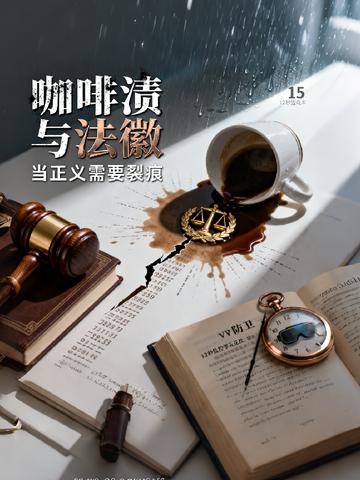
"Outside": When Justice Needs Cracks
The coffee cup was tilted at 15 degrees, and the gavel trembled in the cracks. During the trial, Shen Mo, a prosecutor with obsessive-compulsive evidence, met Lu Yan, a lawyer who was good at exploiting loopholes in the rules. An "excessive defense" case opened the first crack in the judicial order. When 12 seconds of monitoring are missing, Morse code is hidden in coffee stains, and pocket watch second hands are stuck, when cracks appear one after another in the precise rules, is this the beginning of a loss of control, or is it another possibility of justice?
From the protection of files in the rainstorm garage to the reorganization of memories in the psychological sandbox, the two men repeatedly competed between "procedural justice" and "substantial justice." Fingerprints on threatening letters, car accident scenes in VR, and the revolution of blockchain evidence chains, they are both defenders and breakers of rules. When the shadow of judicial corruption spreads, the moral dilemma of forged testimony and the threat of license revocation ensue. They use the pen as a sword and the code as a shield to conclude a contract of silence in the gray area.
The three-volume epic witnessed the two men's tit-for-tat confrontation to soul resonance: using "rule flexibility" to fight against the rigid system, and using judicial conscience to reconstruct the boundaries of justice. In the end, the coffee cup shattered and re-condensed, the pocket watch stopped and restarted, and when the gilded cover of the new code was closed, their answer was hidden in the time capsule of the Rule of Law Park - rules need to breathe, and those who breathe will eventually become the creators of new rules.