Introduction to the novel
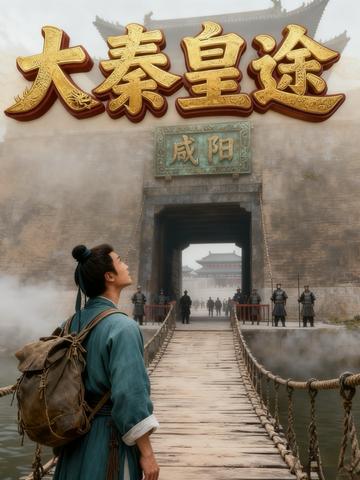
Lin Yan, an assistant researcher at the Institute of Archeology of the Chinese Academy of Sciences, accidentally traveled to the Qin Dynasty in the 35th year of the First Emperor in a car accident on Chang'an Street in Beijing in 2025, and became a precarious refugee outside Xianyang City. Although the Qin Dynasty ruled the world at that time, there was already a hidden crisis - heavy labor, food shortages, the Lishan Mausoleum and the Chidao Project exhausted the people's resources. There were only two years left before the death of Qin Shihuang and the death of Qin II. The gap between his modern status and the humble refugees of the Qin Dynasty made survival the primary problem.
In order to escape the fate of starving to death or being forced to build the canal, Lin Yan relied on his familiarity with Qin history and modern knowledge to stand out at the Weishui Canal construction site: he used a simplified version of the level "horizontal rod" to solve the problem of inaccurate river measurement, and designed a "recording record" in a modern ledger format. The "account grid" replaced the backward records on bamboo slips, and also optimized the project grouping model. The canal project that was originally completed in March was completed one month ahead of schedule. Not only did it avoid physical pain, but it also promoted him from a refugee to an official who assisted in the management of the construction site, taking the first step to establish a foothold in the Qin Dynasty.
This achievement was unexpectedly reported to Xianyang Palace, and Lin Yan was summoned to meet Qin Shihuang. Faced with the scrutiny of this eternal emperor, he not only concealed his identity as a time traveler, but also accurately targeted the pain points of the Qin Dynasty. He offered suggestions to solve the problems of food shortage and heavy corvee, and gradually won the trust of Qin Shihuang. After that, he was involved in court intrigues and court disputes. While dealing with ministers such as Li Si and Meng Tian, he also established a deep friendship with his son Fusu. With the help of modern infrastructure, agriculture, and medical knowledge, he promoted the reform of the Qin Dynasty - improving agricultural tools to increase grain production, optimizing the construction of Chidao and the Great Wall.