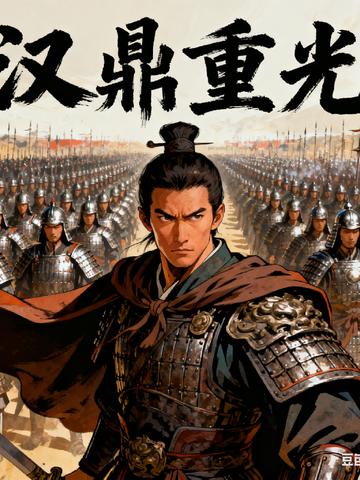
When the flames of war licked the fields of the Central Plains, young Chen Mo tightened his grip on the plow in his hand - the plow that had plowed the black soil of Suiyang would also plow away the fog of troubled times in the future.
He started in a wheat field, and with the tenacity of a wheat seedling, he withstood the glare of swords and swords: protecting the grain harvested by the people was more important than guarding the city wall, improved farm tools were more powerful than sharp swords, and the grain tax figures in the account books were more important than military symbols. Dong Zhuo's cavalry trampled his wheat fields, Cao Cao's counselors counted his grain and grass, and Yuan Shao's envoy laughed at him that "it is impossible to achieve great things with mud legs", but he insisted on letting these "big things" take root in the mud.
From the city tower in Suiyang to the palace in Luoyang, the soldiers he led always carried farm tools on their backs. When discussing matters, they always asked "How is the moisture situation?" On the day he ascended the throne, he even placed a newly cast iron plow next to the dragon throne. The ministers advised him to perform the Zen ceremony, but he pointed to the children rolling on the grain drying field outside the palace: "The country and the country are not in the memorial text, but in the wheat cakes they gnawed."
Later, it was written in history books that he "used agriculture as his sword and grain as his armor." It was said that his dragon robe was stained with the fragrance of wheat and his jade seal pressed against the picture of farmers and mulberry trees. Only Chen Mo himself knew that he had never wanted to be an emperor, but that the wheat seedling he had supported had grown into a wheat seedling that covered thousands of miles before he knew it - and he, the field guardian, would eventually stand on the strongest field bank for the wheat fields in the world.