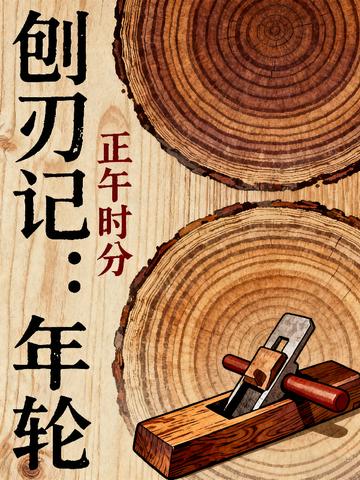
Chen Shouyi, a rural youth beside the Jiaoji Line in Shandong Province, witnessed the cheers at the founding ceremony of the People's Republic of China in 1949 while holding half a sweet potato. This carpenter apprentice who was once forced to build artillery towers for the Japanese army was allocated three acres and seven cents of land during the wave of land reform, but he could never put down his plane and adze. From the village carpentry stall to the county carpentry club, from setting up factories and doing business after the reform and opening up to transformation and innovation in the new era, his seventy-year entrepreneurial path is closely intertwined with real historical events such as land reform, the War to Resist U. S. Aggression and Aid Korea, public-private partnerships, and market economy reform.
The blue cloth coat and red cloth strips of Lin Yuezhen, a girl from the same village, were his constant light and warmth in his turbulent years. They lived through the years of famine, feeding themselves with coarse grains, sharing the joy of the first order of reform and opening up, and watching their children integrate into the digital age. When the white-haired Chen Shouyi rubbed the treasured land certificate and the first piece of bed wood, what he traced across his fingertips was not only the grain of the wood, but also the growth rings of the Republic as it stood up, became rich, and became stronger. The story ends at the workshop window in 2025. He looks at the new generation of workers debugging intelligent machine tools, looking beyond the high-speed rail on the Jiaoji Line to the broader distance in the morning light of 2026.