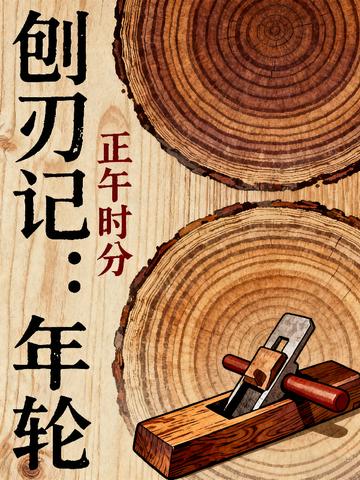
Chen Shouyi, a young man from a village near the Jiaozhou-Jinan Railway in Shandong, clutches half a sweet potato as he witnesses the cheers of the 1949 founding ceremony. Once forced to build blockhouses for the Japanese army as a carpenter's apprentice, he receives three mu and seven fen of land during land reform, yet can never bring himself to put down his plane and adze. From a woodworking stall at the village entrance to a county furniture workshop, from opening a factory and doing business after Reform and Opening Up to embracing innovation in the new era, his seventy years of entrepreneurship are closely intertwined with real historical events, including land reform, the War to Resist US Aggression and Aid Korea, public-private partnerships, and market economy reforms.
The blue cotton jacket and red cloth ribbon worn by Lin Yuezhen, a girl from his village, bring him a steady warmth through all the ups and downs. They endure years of famine together, filling their stomachs with coarse grain; share the joy of their first order after Reform and Opening Up; and watch their children enter the digital age. When white-haired Chen Shouyi runs his hand over the land certificate he has treasured and the first piece of wood he used to make a bed, his fingertips trace not only the grain of the wood, but the decades in which the People's Republic went from standing on its feet, to growing prosperous, to becoming strong. The story ends by a workshop window in 2025. He watches the next generation of workers calibrate smart machine tools, then looks past the high-speed trains on the Jiaozhou-Jinan Railway toward the wider horizons of the dawn of 2026.