In 1967, the last emperor, Puyi, drew his final breath on his sickbed. His whole life had been shackled by the label of “the ruler who lost his country.” The humiliation of the Manchukuo Imperial Palace and the whispers in the botanical garden became his eternal nightmares.
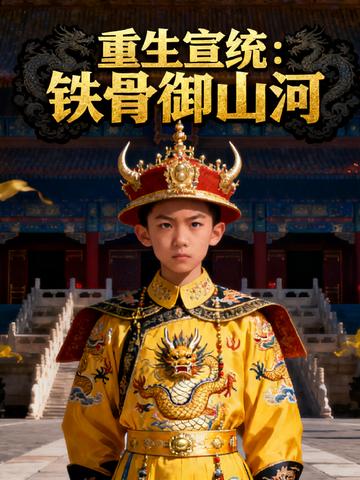
But Heaven took pity on him, and he was reborn in the late autumn of the third year of the Xuantong reign, at the moment when Yuan Shikai’s Beiyang Army stood at the gates and Empress Dowager Longyu was about to sign the abdication edict. This time, the twelve-year-old emperor had no fear in his eyes, only the resolve of someone rising from the ashes.
He refused to sign the abdication edict, rebuked princes, and challenged envoys. Swearing by the land of his ancestors, he vowed to rewrite the fate of a fallen empire. He sold off the palace treasures to fund the army, then went in person to the Hushenying camp. Bending before the soldiers despite his imperial status, he used sincerity and fervor to revive their flagging morale. He had to resist Yuan Shikai’s demands for abdication, guard against the covetous foreign powers, and tear open a path through the rotten Qing court to find a way forward for China.
From a dragon trapped in shallow waters to a man of iron protecting his homeland, the reborn Puyi was no longer a puppet at the mercy of others. With his own strength, he would move history itself, vowing to defend his ancestors’ lands and protect the people. The path to defying fate was filled with thorns and deadly threats, but he never took a single step backward.
Although Puyi was an emperor, his life was full of tragedies. In this book, Puyi revitalized China and was proud of it.