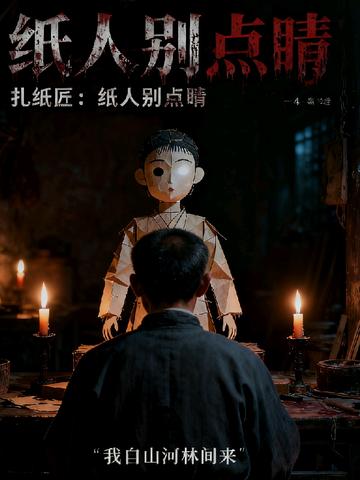
In that dim shop with flickering candlelight, the papermaker is a lonely traveler walking on the boundary between yin and yang. Their craftsmanship is to give soul to bamboo strips and colored paper, paving the way to the underworld for the deceased to accompany them. However, in this ancient industry, rules are more important than craftsmanship, and taboos are heavier than life.
Painting a dragon without finishing the eyes, or a paper horse without raising its hooves - with just one stroke, dead objects may come to life; willow wood is not allowed to be used as bones, lest the souls of the dead linger; not working in the dark during the day, and not completing the work at night, is a reverence for the invisible world. The money they have earned must be broken up on the same day; the paper figures born in their hands must not resemble the appearance of a stranger.
Every piece of paper is a dialogue with the unknown. These oral taboos are not superstitions, but rules of survival written with blood and lessons. What they protect is not only the safety of the papermaker himself, but also the balance between life and death. When a craftsman takes over this inheritance, he is destined to be next to the shadow, and every step must be done on thin ice, because once a taboo is violated, it will awaken not only sorrow, but also uncontrollable treachery and disaster.