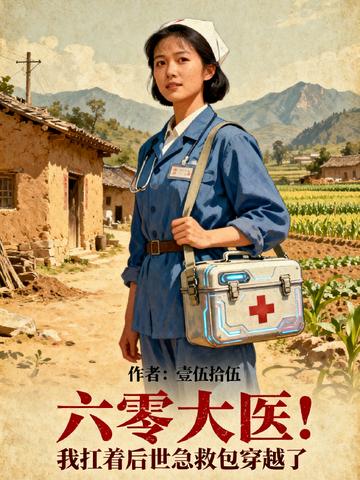
Doctor 60: I traveled through time carrying the first aid kit for future generations
Lin Wei, a doctor of both Chinese and Western medicine, opened her eyes and fell from the emergency operating table into a dilapidated house in 1965 - becoming the girl of the same name in a remote mountain village who was scolded for "blind treatment", with only a bulging first aid kit next to her.
These days, the commune health center is short of doctors and medicines, and the villagers rely on "local methods" to carry on. Young Sun Shaoping coughs so hard that he can't straighten his back. Gao Jialin, an educated youth who returned home, has a broken leg and needs amputation. An old man has a heart attack and can only wait to die. Seeing the suffering in front of her, Lin Wei tightened her grip on the treasures in her bag: a solar ECG monitor, concentrated antibiotics, Chinese medicine formula chips, and a bunch of life-saving "rare gadgets."
Amid doubts, she used nitroglycerin to save an old man with a myocardial infarction, relied on acupuncture and astragalus soup to stabilize an anemic teacher, and even dared to use bicycle parts to transform an "earthy charger", allowing modern equipment to operate in the 1960s. Some people scolded her for "engaging in feudal superstition." She used a homemade blood pressure meter to measure data and prick silver needles to treat arthritis on the spot. The slap in the face only lasted a moment. When the antibiotics were used up, she led the villagers to grow herbs, boil ointments, and knead the medical skills of later generations into the loess.
From being a barefoot doctor in the village to being the pillar of the county hospital, from "hand-rubbing" sterilizing pots to writing rural medical manuals, Lin Wei has entered the era with a first aid kit. When the light of Chinese and Western medicine shone into the years of scarcity, she discovered that the best "black technology" has always been the benevolence of doctors.