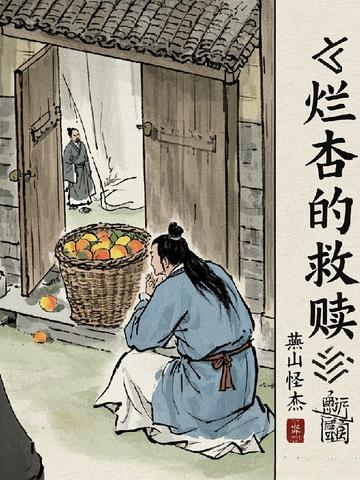
After Zhang Liang was granted the title of "Liuhou" by Liu Bang, he returned home in fine clothes to visit his master Huang Shigong. However, Huang Shigong stayed behind closed doors and only sent a basket of rotten apricots. The entourage complained that the master despised Zhang Liang, but Zhang Liang fell into memories. He recalled that Huang Shigong deliberately threw away the plump grains while drying the wheat and left the shriveled grains. He also made things difficult for him three times on the bridge and taught him the art of war after attending an appointment in the early morning.
Zhang Liang understood that the basket of rotten apricots was not a humiliation, but a warning. He explained to his entourage that fame and wealth are like ripe apricots, which may seem beautiful but can easily deteriorate. His original intention of learning the art of war was to end wars and stop people from being displaced, and he should not be greedy for titles. Zhang Liang then kowtowed to Chai Men, thanking Huang Shigong for teaching him the art of war, teaching him patience, and using the dead apricot to remind him to retire with great success.
After that, Zhang Liang resigned most of his fiefdom and distributed the gold and silver given by the emperor to the people. He often claimed to be ill and did not participate in court affairs. Some people laughed at him for being stupid, but he used the principle of almond trees to show that they should not be greedy. Later, Liu Bang became suspicious of the hero, Han Xin was demoted and executed, and Xiao He was forced to commit suicide to save his life. Only Zhang Liang lived in peace and security in the reservation, and finally traveled with Chisongzi. Before leaving, he visited his master again. The rotten apricots in the firewood basket had been replaced by sweet dried apricots. The world praises Zhang Liang for being smart and knowing how to advance and retreat, but few people know the profound warning significance of Huang Shigong's many teachings and rotten apricots behind this.