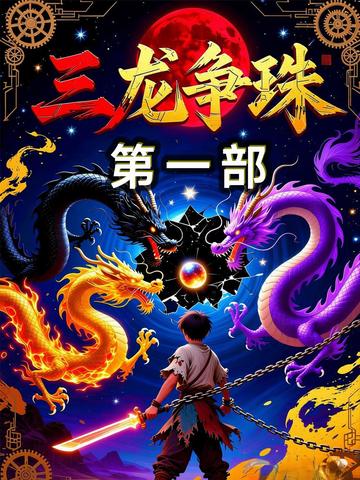
Another World: Three Dragons Struggle for the Pearl
异世:三龙争珠
- Status
- Ongoing
- Length
- 211k Words
- Genre
- Historical
- Subgenre
- Historical & Ancient
- Audience
- Male
- Updated
- 5mo ago
- Source
- Fanqie
Stats
Tags
Synopsis
Reader comments
In booklists 5

Come On, Come On, the Elders Are Pushing Books
The Best Anti-War Theme
I want to read a book similar to "Spy War: I Can Actually Recognize Spies (Spy War: Jedi)". If you have any good books on the Anti-Japanese War and espionage wars, share them with everyone. Don't hide them!
Seems Non-Toxic and Harmless
I want to read a book similar to "The Foolish Plays of the Gods". It's good to watch. If you like it, you can recommend it to your friends.
Ask for Mutual Reviews of New Books
I want to watch content similar to "Isekai: Three Dragons Struggle for the Pearl". Three Dragons Struggle for the Pearl, an imaginary history, an ancient soul-traveling survival story, a historical story of farming, I stayed up all night chasing updates and couldn't stop at all! Time travel, rebirth, suspense, imagination, history, ancient fantasy, imagination, urban high martial arts novels are recommended!

A Novel About Immortality That You Will Like.
Want to watch something similar to "The Art of Heaven and Earth!" Content. Stay tuned for the magical story of a young man traveling through various worlds and cultivating immortality.
The story is cleverly conceived, which is a pity that it is a rare work of Tomato. The story has a wonderful setting and is about the survival of the soul. Through Dugu Doulu, it details the hardships of survival at the bottom of the village. The soul travels through the ancient fictional survival background, and the coder is counterattacked by the AI and travels through the desolate village, which is the difficulty ceiling of hell. The novel subject matter gives the story background thickness and value, the emotions have a core and the concept is sublimated, breaking through the traditional framework, and the main and branch characters are vivid, delicate and vivid. The compact plot and the thrilling output of the series of climaxes show that the author still maintains stable creative power. It is suitable to recommend to readers who like this kind of subject matter to stay up late to catch up and read more deeply. Definitely worthy of five-star praise [like][like][like]
It is a soul-traveling and survival plot novel based on an imaginary historical past. There are many characters. It requires careful reading to get a taste of it. Reading it once is too little, so I recommend reading it several times. A multi-line narrative time-travel work, the humorous absurdity of the thunderbolt opening is intertwined with real survival. The soul travels to Wucun Village, an ancient disaster-stricken village. While struggling for the bottom line of survival, he accidentally gets involved in a conspiracy storm surrounding the identity of an alien. The author uses a multi-line narrative to lay out the story exquisitely. On one side is the delicate rural village scene of plowing stones to reclaim wasteland and recording work points in rural survival. On the other side is the treacherous power struggle between the three sons of the Kyoto court who descended to the imperial city and the Yizi who was buried in the palace. The two clues naturally interlock through the setting of the celestial omen to build a grand narrative pattern. The character creation is extremely tense, and the arc of growth from Gou Quan Sheng to Dao Mang Ji Tian is clearly visible, and the spying of various forces in the chapter of wolves licking blood further hints at the game between the three dragons fighting for the pearl. The work's research on historical details is commendable, and its depiction of the characters is worthy of respect. The agricultural innovation of Longping Golden Rice Seed and the folk autonomy that socializes with the hearts of the people not only restore the ancient social texture, but also imply modern humanistic care. The desolate brushwork of drought and burning fields complements the fantasy image of a midday dream coming true, and the passages such as "Dignity to open the stove" and "Jiebo to survive the disaster" have become poetic eyes in themselves. The only regret is that some of the plot twists are a little sharp, but the overall rhythm is as exciting as the sudden change of rice waves. It is not only a survival manual for surviving in troubled times, but also a spiritual declaration for individuals to fight against destiny. When disasters and machinations come, the road of defying destiny with rice as a sword and the people's heart as a shield is igniting sparks in the wilderness. The language style is thick and smart at the same time.
This fictional historical novel combines elements of astrological prophecy and political growth. Its narrative structure and multi-dimensional worldview construction demonstrate its unique creative ambition. The four-stage framework is relatively rare in the field of online writing. The opening chapter "Thunder Strike" details the physical reshaping of the protagonist and the collection of materials, which delicately presents the survival anxiety of the traveler in a strange world; and the writing suddenly changes after Chapter 11, using the celestial phenomenon of "Three Stars Falling from the World" to connect the struggle for imperial power. Units such as "A Change of Son in the Palace" and "Blood Red Stone Tribulation" complete the perspective jump from survival in the wild to the game of the court, forming a dramatic collision between the reckless perspective and the perspective of the powerful. The astrological setting of "Three Stars Come to the World" is not only a plot catalyst, but also a carrier for exploring "fate chooses people" and "man will conquer nature". The parallel montage of the simultaneous births of the three princes forms a strong contrast with the palace secrets of "Li Dai Tao Zong", revealing the constraints and reconstruction of the characters' fates predicted by prophecies. This writing method that integrates astrology into the game of power not only continues the narrative tradition of "Ying Huo Shu Xin", but also gives modern people the ability to think about their own destiny. Not indulging in grand power narratives. It shows how rural public opinion shapes the protagonist, and construction fortifications symbolize the establishment of the foundation for survival. These folk scenes create tension with the court drama of "The Emperor's Arrival in the Harem". The "Luozhou" clue in the trailer implies that economic activities will become a new variable to compete with traditional power, which is in line with current readers' expectations for multiple value systems. Room for improvement and potential value. As a debut novel, the text is a bit stiff in controlling the rhythm of scene changes. For example, the transition between soul travel and Kyoto's conspiracy can enhance the foreshadowing. The frame design has shown a pattern that goes beyond conventional web articles, and its localized use of astrology provides a new paradigm for historical fictional themes. If the military and economic descriptions of the separatist stage can be deepened in the future, a more realistic picture of troubled times can be constructed.
A novel start! The coder's soul was devoured by the AI and he traveled through the disaster-stricken village. In the beginning, his father was buried by lightning and his family was left with nothing but Guanyin soil. It can be called the difficulty ceiling of hell. But the protagonist uses modern wisdom to break the situation: he touches river clams to fill his stomach, sharpens rusty knives to survive, relies on three books to unlock survival skills, and even accidentally digs out the high-yielding rice seeds and Kanyu secrets left by his father. There are no brainless cheats, only down-to-earth survival details: helping each other to repair houses with villagers, using paper clips to open treasure boxes, and relying on coordinated methods to cook wild vegetable and clam soup. The warmth of nostalgia touches people's hearts. The protagonist, who is a coder with no power at all, makes his way step by step in troubled times. He has both the hard-core operation of survival and the sense of fate of lurking in the abyss. The plot is exciting and dense without losing the pyrotechnics, making people more and more addicted to it!
It's a very interesting novel about time travel. The beginning of the article gives people a feeling of excitement. The three dragons' struggle for hegemony within the framework of soul traveling shows the tension of fantasy. "Three Dragons from Another World: Battle for the Pearl" takes the soul-traveling setting as a guide and builds a fantasy world full of suspense and passion. The storyline is compact and highly layered. The integration of soul-traveling elements breaks the shackles of the conventional fight for hegemony in another world. The protagonist's awakening and growth in a strange continent form a clever echo with the core plot of "Three Dragons Struggle for the Pearl". Every plot advancement has hidden foreshadowing, which not only ensures the smoothness of the story, but also adds the charm of reversal, making it fascinating to read. In terms of character creation, although the work focuses on the struggle for hegemony, it does not ignore the three-dimensionality of the characters. The motivations and choices of each core character fit their identity. The tenacity, strategy and struggle of the character are vividly displayed on the page. There is no absolute distinction between good and evil. Only the collision of positions and beliefs allows the characters to get rid of the shackles of flatness and become vivid and credible. Overall, the novel perfectly combines the fantasy of soul traveling with the grand narrative of the three dragons' struggle for hegemony. The plot is exciting and ups and downs, and the characters are rich and three-dimensional. It not only satisfies the expectations of fantasy lovers for a passionate plot, but also enhances the quality of the work with its delicate character portrayal. It is a masterpiece that is both refreshing and in-depth.
This tomato famine survival article can be called a dazzling work on the platform, and it is definitely the best of its kind! The protagonist, a coder, travels to an ancient fictional disaster-stricken village due to AI backlash, and falls into a hellish desperate situation at the beginning. The story centers on the protagonist's survival journey, and depicts the struggle and tenacity of low-level people in desperate situations in a delicate and moving way, adding a unique sense of weight to the theme of survival in a disaster. The work breaks out of the routine of cool writing, with a clear main line, full branch lines, vivid and three-dimensional characters, and a progressive and compact plot. The reading experience is full and the author's solid creative skills can also be seen. Fans of disaster literature should not miss it!
The story is cleverly conceived and is a rare work by Tomato. It is worth recommending. The story has wonderful settings and a soul-traveling survival perspective. It is very perfect. Through Dugu Doulu's delicate writing style, he tells the hardships of survival at the bottom of the village. The ancient fictional survival background of the soul travels through history and the coder is backfired by the AI to travel through the disaster-stricken village, which is the difficulty ceiling of hell. The novel subject matter gives the story background thickness and value, the emotions have a core and the concept is sublimated, breaking through the traditional framework, and the main and branch characters are vivid, delicate and vivid. The plot is compact and the series of climaxes are satisfying, showing that the author still maintains stable creative power. It is suitable for readers who like this kind of subject to stay up late and read more deeply.
Overhead, overhead, a rare good article about overhead [like] The writing is delicate and the depiction is subtle. It is a good story about traveling through another world. It is exciting and full of excitement [shy] The protagonist is described in detail, and in a village in troubled times, the protagonist solves various problems with wisdom, giving a different kind of refreshing feeling! Do you like historical machinations? So this one is indeed worth looking forward to, the characters are three-dimensional and not brainless. The picture is very immersive, and the protagonist's character also has a good growth path, and it doesn't feel ridiculous [laughing] Worth a look👀
Strongly recommended by classmates, the subject matter of the work is novel and strange. The coder's soul travels through the desolate village and sets a novel and innovative framework background. Dugu Dulu survives at the bottom of the desolate village. The plot density is high, the logic is self-consistent, the language is concise and lively, the scene descriptions are vivid, breaking through the traditional framework, and the main and branch characters are vivid, delicate and vivid. The ingenious conception gives the story background depth and value, sublimating the emotional core and breaking through the traditional framework. The sequential climax and the compact and satisfying output show that the author still maintains stable creative power and expands the narrative dimension. I think it is suitable to recommend it to readers who like this kind of subject matter and stay up late to catch up on it and read it deeply.
The writing style is humorous, the plot is rich, the knowledge is rich, Tomato is a rare work, but it is a rare work. The plot is wonderful, the description is detailed, and the opening is an epic story of survival in troubled times and disasters. The novel setting gives the story background depth and value, the emotions have a core and the concept is sublimated, breaking through the traditional framework, and the main and branch characters are vivid, delicate and lively. The compact plot, layer by layer, and successive climaxes provide a sense of satisfaction, showing that the author still maintains stable creative power. It is suitable for readers who like this kind of subject to stay up late and read more deeply.
The protagonist transforms from a keyboard warrior into a village leader, and his pragmatism and responsibility create a down-to-earth heroic image. Supporting characters such as Brother Dulu and the helping hand from the neighboring village, although there is not much writing, they jointly weave a picture of human nature in troubled times, including the greed of officials and the loyalty of common people, and the characters are three-dimensional. The whole article uses delicate descriptions of survival and grand narrative ambitions to create an entertaining and ideological work with novel themes. It is recommended to readers who like farming + machinations. The sword energy of the three dragons breaks through the magic formation, and they make a promise to travel to another world. This journey of fighting for the pearl is full of passion and affection!
The story begins in the famine years and is full of immersion. The writing style is humorous and interesting, the writing is smooth, the content is rich, the descriptions are detailed, and the characters are vivid and vivid. The plot setting is novel and the plot is very compact. Once you watch it, you won't be able to stop watching it. It has risen since the lean years, and is now the most popular AI. This opening attracted me. The phrase "poverty is engraved in my bones" is very weighty, and this statement is very different. With a lot of imagination, he wrote a "feast" on various themes such as different farming, which is a feast for the eyes. Love it, love it, add it to my bookshelf to read more!
The story novelly depicts the struggles and wisdom of the people at the bottom. It not only has a sense of reality of survival in a desperate situation, but also highlights the warmth of group mutual help. From a keyboard warrior to a village leader, his pragmatism and responsibility have created a down-to-earth heroic image, and the character image is three-dimensional and full. The supporting characters are also brought to life. The protagonist and supporting characters jointly weave a picture of human nature in troubled times - both the greed of officials and the loyalty of civilians. The writing is smooth, the plot unfolds smoothly, the IQ is online, the characters are very good, it is a hearty read, the plot has ups and downs, the plot is compact and exciting without being protracted, it is a very good novel, come on!
The characters are three-dimensional, a time-travel novel full of humanistic care. It is not just for "coolness", but also focuses on people's dignity, wisdom and unity in desperate situations. Behind the fight for golden rice seeds lies the inheritance of the rights to survival, development and the spirit of our fathers, with profound intentions. The plot lines are cleverly foreshadowed, and the setting of "alien destiny" gives the protagonist's struggle a sense of fate as a game of destiny. The story is reaching its climax, and the collision between grassroots power and the shackles of imperial power is imminent. Author, please update as soon as possible!
The beginning of the time when the down-and-out coders are desperately trying to survive, and the AI backfires on time travel, gives you a sense of immersion in the explosive times of the times, and it's so exciting! When a poor boy travels to another world, there is no unexpected crazy golden finger blessing, but more of a sense of satisfaction in building from 0 to 1. Combined with modern knowledge, he gradually moves himself from a poor orphan to the position of a leader. The layout is unfolding layer by layer. How does the down-and-out orphan get involved in the situation in Kyoto? Is it destiny or self-choice? How will the predicted three dragons fight for the pearl be previewed? The leap from family to home country increases the length of the full text. The daily lives of ordinary people are intertwined with the daily lives of powerful people, showing huge differences. When daily life suddenly turns into a tug-of-war of intrigues, be happy. If you like From 0 to 1, Wisdom and Hegemony, I highly recommend it! @
As a masterpiece focusing on passionate fantasy, the novel uses the "power of three dragons" as the core clue to weave an otherworldly adventure that is both refreshing and tense, allowing readers to immerse themselves in the pleasure and passion of the world of cultivating immortals in the dense plot conflicts. The most eye-catching thing about the story is the unique power system and combat design. Every battle of the protagonist is accompanied by realm breakthroughs and surprise bonuses, which not only shows the refreshing feeling of upgrading the combat power, but also strengthens the character bond through move design, making the battle scenes both shocking and emotionally connected. The rhythm of the plot is accurately controlled to meet the readers' reading preferences. High-density conflicts and rapid reversals are present throughout, tightening the plot tension and keeping the main line moving forward at a high level. In terms of character creation, the decisiveness of the protagonist is in sharp contrast with the coquettishness of his partner. In the interaction, there is a tacit understanding of fighting side by side, and there is also a sentiment of youthful ignorance, which adds a warm undertone to the tense adventure, and the villain is not a flat tool. As a fantasy novel, while maintaining the core excitement of the "upgrade flow", the work also takes into account the foreshadowing of the worldview and the filling of details, allowing readers to gain instant satisfaction in the process of following the update, and can also look forward to the in-depth development of the subsequent plot. This book is undoubtedly a masterpiece that is worth staying up late to catch up on and cannot stop reading. Its unique setting of the power of three dragons and dense plot highlights perfectly meet the reading expectations of passionate fantasy.
After staying up late to finish reading "Three Dragons Quest for the Pearl", I must say that this book completely subverted my stereotype of time travel novels. The subject matter is so novel that it is surprising - it does not fall into the cliché of "system cheating", but allows the protagonist to actually crawl around in the disaster-stricken village. From identifying wild vegetables to implementing the work-point system, every step of survival is filled with hardship and wisdom. The author's imagination lies in his skillful weaving of a two-line network. On one side is the down-to-earth farming infrastructure in the village, and on the other side is the treacherous plot of Kyoto's "three dragons competing for the pearl". When the two lines suddenly intersect because of a "golden rice seed", the sense of fate of personal struggle hitting the tide of the times comes to mind, and the plot is so compact that it makes people breathless. What's even more rare is that the characters are three-dimensional. The protagonist is not a born hero, his growth trajectory from fear to responsibility is clear and believable; the supporting characters are also flesh and blood, the greedy upright and simple villagers together form a vivid portrait of a group in troubled times. All of this is narrated with smooth writing and a rich sense of picture. The wind and frost of the village and the undercurrent of the palace seem to be right in front of you. It can be said that this is a work that people can't help but stay up late to catch up on. It uses solid details, grand patterns and profound human descriptions to tell a story about survival, choice and resistance. If you are tired of mindless and cool writing, then this work full of ambition and sincerity is definitely worth investing late into the night.
Tomato's rare creative masterpiece! This soul traveling survival article is such a pity! Taking a coder's soul as an AI and traveling through a desolate village as an example, Dugu Doulu's journey of survival on hellish difficulty details the hardships of survival at the bottom down to the bone. The imaginary historical background makes the subject more thick, the emotions have a core, and the ideas are sublimated. It also breaks through the traditional framework, and the main and branch characters are vivid and three-dimensional. The plot is compact and reaches the climax throughout, and the excitement comes step by step. The author's stable creative power is so impressive that readers who like survival stories will have their eyes closed and it will be worth staying up late to follow!
I can't stop staying up late to catch up on it. The subject matter is novel and interesting. It is an epic story of survival in troubled times and disasters. The multi-line narrative method builds a grand architectural rule framework. The story is novel, the author's imagination is wide-open, the writing is fluent, and the characters are vividly described. The compact plot and novel conception give the story background depth and value, and the emotions are cored and sublimated. You can't stop staying up late to catch up on it. The story is novel and the characters are described in detail and vividly. It is a sincere work that breaks away from the traditional literary conventions and metaphors the game of power and morality. The novel setting conveys the value of the work in the delicate narrative. It is suitable to be recommended to readers who like such novel themes for in-depth reading.
The plot content is really good, and it is cleverly designed. It is a pity that Tomato rarely works. The story has a wonderful setting and a novel soul-traveling survival perspective. It details the hardships of survival at the bottom through Dugu Doulu's survival in the village. The ancient fictional survival background of soul-traveling history and coders traveling through desolate villages can be called the difficulty ceiling of hell. The novel subject matter gives the story background thickness and value, the emotional conception is sublimated, breaking the traditional framework, and the main and branch characters are vivid, delicate and vivid. The compact plot, serial climax, and step-by-step exciting output show that the author still maintains stable creative power. It is suitable for readers who like this kind of subject to stay up late and read more deeply.
It's a pity that Tomato is a rare work with a clever concept. The story is wonderful and has a novel soul-traveling survival perspective. It details the hardships of survival at the bottom through Dugu Doulu's survival in the village. The ancient fictional survival background of the soul travels through history and the coder is backfired by the AI to travel through the disaster-stricken village, which is the difficulty ceiling of hell. The novel subject matter gives the story background thickness and value, the emotions have a core and the concept is sublimated, breaking through the traditional framework, and the main and branch characters are vivid, delicate and vivid. The compact plot, serial climax, and step-by-step exciting output show that the author still maintains stable creative power. It is suitable for readers who like this kind of subject to stay up late and read more deeply. [Sending Hearts] Wonderful return item! ! !
Breaking away from the traditional novel routine of another world, with "three dragons seizing the pearl" as the core, it interprets a legend of troubled times that is both passionate and tender. The beginning of the story is high-energy, and the setting of the dragon soul awakening in the Burial Dragon Abyss instantly catches the eye. The mystery hidden in the ancient bronze mirror and the stunning appearance of the magical weapon in an instant make the story full of fantasy. Different from the halo crushing of a single protagonist, the three powerful dragons each have their own strengths. Their competition is not just for power, but also a collision of positions and morals. The protagonist Luo Yu sticks to her true heart and gradually grows up in troubled times, which makes the story more warm. The plot has a tight rhythm, with machinations and fierce dragon battles alternately staged. The fighting scenes are described in detail, each move is very visual, and the foreshadowing is hidden but not obscure. There is no absolute distinction between good and evil in the book. Each character's choices are consistent with his or her position and past. Emotional entanglements are intertwined with the interests of family and country, giving the story a sense of relief without losing depth. Overall, it is a hearty read. It is a high-quality otherworldly work that takes into account the setting, plot and characters. A very good article on group portraits, highly recommended
It saved my book shortage. It's a very interesting time-travel novel with an alternate world view. I like it very much. It amused me to death while listening to it and reading it, haha. Every character is very vivid, come and read to me Dugudulujiliguludilidulu belly rumbling, haha. The two tiger brothers who can't calm down are really tough. The name Ouyang Qiqiang is so interesting. The article goes from the protagonist's efforts to survive in the early stage to the concerted efforts of everyone in the later stage to fight against the machinations and destiny. Going through various obstacles in the process is no different from fighting monsters and upgrading, but it has its own unique methods and methods, which are laid out chapter by chapter, exciting and interesting. Suitable for repeated reading, endless fun.
This majestic fictional epic, with its exquisite two-line narrative, weaves a thrilling picture of survival between the vast rural land and the stern temples. The author uses the pragmatic wisdom of "joining villages to stock up on food" and the autonomous exploration of "work-divided rural contracts" as the two keys to enter the troubled times. With extremely delicate brushstrokes, the tenacity of the people at the bottom to survive in the cracks of ruthless natural disasters and cruel man-made disasters is closely intertwined and advanced in parallel with the turbulent and thrilling power game in the court. Under the double strangulation of catastrophe and conspiracy, individuals burst out not only the instinct to survive, but also the tragic courage to resist the so-called "destiny". Their struggle and struggle constitute a breathtaking and magnificent picture. The narrative structure of the work is grand yet subtle. From the barren scorched earth to the undercurrents on the Golden Palace, from the calluses on the rough palms of rural villagers to the murderous intent surging under the robes of powerful ministers, the span of time and space and the depth of levels are handled with ease. What is particularly valuable is its almost demanding attention to historical details. Whether it is the details of famine in the famine years, the organizational form of self-rescue among the people (such as the collaboration mechanism of "joining villages to stock up on grains", the distribution and constraints of "work-divided rural covenants"), or the subtle rules of court etiquette and power operations, all give this fictional work a heavy real texture and historical thickness. What is even more thought-provoking is that the author does not stop at describing suffering and struggle. His writing is full of profound modern concerns for the proposition of "civilian autonomy." In the seemingly simple institutional designs such as the "work-divided rural contract", there is the collective wisdom and order power of the people to self-organize, self-manage, and help each other in desperate situations. This focus on and writing about the self-generated order at the bottom makes this epic go beyond a simple story of intrigue or survival, and shine with the spiritual light of endless life originating from the folk. It is this grand vision, rigorous details, and profound exploration of survival wisdom and spiritual power that jointly create this fictional epic masterpiece with both ideological depth and artistic appeal. It is not only a legend in a fictional world, but also a profound paean to human resilience and collective wisdom.
An epic story of survival in troubled times and disasters—a brief discussion of "Another World: Three Dragons Struggle for the Pearl" This is a time-travel survival novel set in an imaginary and troubled time in ancient times. The author uses a dual-line narrative method to construct a grand narrative structure. The protagonist's soul travels to a famine-ravaged village. From a struggler trying to save his life, he gradually becomes involved in the undercurrent involving imperial power, destiny and the general trend of the world, and finally changes his destiny against the will of heaven. Reading this novel will make readers feel like "I have no control over my fate." This article vividly depicts the struggle and wisdom of the people at the bottom in the famine environment. The protagonist uses modern knowledge to lead the villagers to fight against hunger. It not only gives a sense of reality of survival in a desperate situation, but also highlights the warmth of group mutual help. The protagonist transforms from a keyboard warrior into a village leader. His pragmatism and responsibility create a down-to-earth heroic image, and the character image is three-dimensional and full. The supporting characters in this article are also vivid. For example, Brother Dulu, although there is not much writing, the protagonist and supporting characters jointly weave a picture of human nature in troubled times - both the greed of officials and the loyalty of common people. Although this article is about time travel, the author is expressing the relationship between hard work and destiny, which has reference significance for real life. "Another World: Three Dragons Struggle for the Pearl" uses delicate descriptions of survival and grand narrative ambitions to create a work that is both entertaining and ideological. Recommended to readers who like: Farming + Machiavellianism.
This is a rare masterpiece of soul-traveling survival on the Tomato platform. It is a pity that it failed to become a big hit. The novel's perspective is cleverly conceived, integrating the three elements of survival, business warfare, and intrigue. It uses Dugu Dolu's experience of traveling through troubled times and famines as the context to lay out a soul-stirring survival epic. The author uses a multi-line narrative technique to build a grand worldview structure and a rigorous rule framework, and the imaginative setting breaks out of the conventions of traditional online writing. The writing is smooth and delicate, and the characters are vivid and three-dimensional. Each character has a unique soul and arc. The plot is compact and fast-paced, without any sense of procrastination. People can't help but stay up late to catch up on updates and can't stop. The background of the story is endowed with profound heritage and profound value. The emotional core is full and sincere, and the concept is sublimated layer by layer. The metaphor of the power game in the article is obscure and subtle, and the power of values of the work is quietly conveyed in the delicate narrative. It can be called a masterpiece worthy of careful reading by readers who like novel themes.
It's a pity that Tomato is a rare work with a clever concept. The story is wonderful and has a novel soul-traveling survival perspective. It details the hardships of survival at the bottom through Dugu Doulu's survival in the village. The ancient fictional survival background of the soul travels through history and the coder is backfired by the AI to travel through the disaster-stricken village, which is the difficulty ceiling of hell. The novel subject matter gives the story background depth and value, the emotions have a core and the concept is sublimated, breaking through the traditional framework, and the main and branch characters are vivid, delicate and vivid. The compact plot, serial climax, and step-by-step exciting output show that the author still maintains stable creative power. It is suitable for readers who like this kind of subject to stay up late and read more deeply.
The novel opens with details such as boiling poisonous wild vegetables in soup, using stones to reclaim wasteland, and the work-point system. The writing is delicate and vivid, depicting the struggle and wisdom of the lower class people in the famine environment. The protagonist leads the villagers to fight hunger through modern knowledge (such as the principle of leverage and plant detoxification), which not only gives a sense of reality of survival in desperate situations, but also highlights the warmth of group mutual assistance. As a key clue, the golden rice seed not only represents the hope of survival, but also symbolizes the last wishes of the fathers and the fire of civilization, giving the story a deep emotional core. The dual-line narrative and the strategic layout echo each other, and the logic is rigorous. The resonance between dragons and spirits overcomes all difficulties, and the passionate fighting interweaves love and affection. This novel about the fight for the pearl in another world cannot be stopped at all.
This is not only a simple time-travel farming novel, but also an epic about the collision and reconstruction of civilizations in a different world. When modern people's thinking and management methods collide with this fictional world full of conspiracy and betrayal, the chemical reaction that occurs is subversive. The setting of the novel provides a natural and tense stage for the story. The protagonist is not the born son of God. He does not possess the magical power to destroy the world from the very beginning. Instead, he relies on the "dimensionality reduction strike" of modern knowledge and the profound insight into the laws of history to get both sides in the game of various forces. He built roads and cities, but in essence he was sowing the seeds of civilization in this wild land. He used economic means to disintegrate enemy alliances, used technological innovation to break monopolies, and used system construction to replace personal heroism. This "moisturizing and silent" method of conquest is more convincing and convincing than simple conquest by force. The description of political intrigue in the book is not a simple intrigue, but a manipulation that has risen to the level of national strategy. Readers will find that what the protagonist finally wins is not only the victory of the war, but also the battle between the advantages and disadvantages of two civilizations. He made the world understand that real power lies not in individual strength, but in collective wisdom and prosperity.
The opening chapter vividly depicts the struggle and wisdom of the people at the bottom in a famine-stricken environment with details such as cooking poisonous wild vegetables in soup, prying stones, and the work-point system for reclaiming wasteland. The protagonist leads the villagers to fight hunger through modern knowledge (such as the principle of leverage and plant detoxification), which not only gives a sense of reality of survival in desperate situations, but also highlights the warmth of group mutual assistance. As a key clue, the golden rice seed not only represents the hope of survival, but also symbolizes the last wishes of the fathers and the fire of civilization, giving the story a deep emotional core. The dual-line narrative and machinations are very interesting. Village Line: From building mutual aid societies and resisting extortion by officials to building embankments to fight drought and resisting insect infestations, it demonstrates the resilience and unity of the grassroots. Kyoto Line: Through chapters such as the three-star Gong Ziwei Emperor Yi Zi, it reveals the imperial power's fear and calculation of the fate of alien stars, and secretly plays a chess game. The two lines gradually intersect, pushing the plot to a climax. Character portraits and character growth Logic Online The protagonist transforms from a keyboard warrior into a village leader, and his pragmatism and responsibility create a down-to-earth heroic image. With characters such as Brother Dulu, a helping hand from the neighboring village, although there is not much writing, they jointly weave a picture of human nature in troubled times - both the greed of officials and the loyalty of common people.