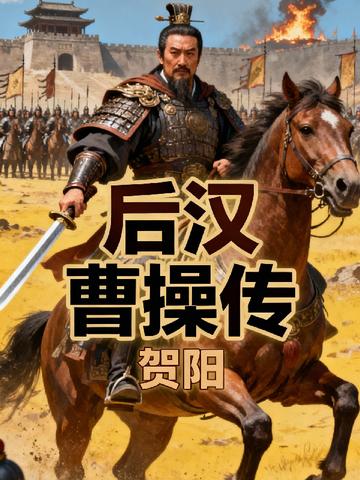
At the end of the Eastern Han Dynasty, the palace walls were stained with blood and refugees were everywhere. When the dignitaries were all in peace, Cao Cao walked out of Qiao County and disrupted the chess game in troubled times with his controversial background as "a eunuch."
His "wild spirit" has been on display since he was a child: when he was five years old, he encountered a water snake and refused to retreat, waving grass to drive it away; when he was thirteen years old, his uncle reported him for poaching, so he pretended to have a stroke, tearing apart the hypocrisy of the adult world with his youthful cunning - this unconventional cruelty became the sharp edge that later broke him out of the situation.
At the age of 20, he became the Northern Commander of Luoyang. When he saw that the laws of the capital were as thin as paper, he hung five-colored sticks at the four gates and hurled the cruel words "Anyone who violates the prohibition will die, regardless of high or low". The great eunuch Jian Shuo's uncle left the city gate privately. Everyone else was afraid of the power, but he was executed in court and his body was exposed for three days. He used his blood to establish his power, so that no powerful man in the northern district of Luoyang dared to cross the thunder.
In the troubled times, he showed his heroic character even more: when he was fighting against Dong Zhuo, the princes waited and watched, he led thousands of people to break into Hulao alone, and was defeated in Bianshui without losing his spirit; The fields were allowed to be cultivated by the refugees, and the barren fields produced grain; the few defeated the many in the battle of Guandu, crushing Yuan Shao's 100,000-strong army; meritocracy, even those who "robbed their wives and received gold" dared to reuse them if they had the ability, opening the way for the poor family to advance.
Some people called him a "treacherous hero", but they forgot that there are no pure heroes in troubled times. He does not want to be a hypocrite who fishes for fame. He only unites the mountains and rivers of the north with an iron fist. He also hides the tenderness of a hero with the poetic heart of "an old man is in trouble and aims for thousands of miles".
Controversies have persisted for thousands of years, but no one denies that he was the most daring chess player in the late Han Dynasty. He was a true hero in the long scroll of history who was too vivid to be ignored.