The day Shazhou fell, the backbone of the Tang dynasty's Hexi region was broken.
The Tibetans laid siege, powerful clans fought among themselves, and the imperial court sent no aid. In this forsaken land, human lives were as worthless as sand, and civilization as fragile as paper.
Until a transmigrator set foot here.
He had no divine weapons or talismans, only craftsmanship from a thousand years in the future and an unyielding heart.
He used gunpowder to blast the enemy, built bastion forts for defense, and harnessed waterworks to sustain the people. Then, with an unprecedented system of laws, he forged scattered hearts into a single block of iron.
The day the city rose, the hunt began.
The Liangzhou army wanted his life, the remnants of the Tibetan forces sought to steal his techniques, and a secret envoy from Chang'an demanded his loyalty. The “Mandragora Circle,” lurking in the shadows of the Silk Road, dangled both bait and a noose before him.
Forced to travel west, he broke his knowledge into sparks and scattered them across the oases and deserts: qanats, new looms, waterworks plans...
Each tiny glimmer kindled hope in the most desolate places.
At last, the legendary “Heavenly Craftsman's Secret Realm” appeared before him.
There were no treasures within, only a Wall of a Thousand Tongues engraved with inscriptions in Chinese, Sanskrit, Persian, and other languages, along with a verdict from across time and space:
“When knowledge becomes a power held by the few, civilization will ultimately destroy itself.”
Yellow sand filled the sky as blades were drawn on all sides.
But at that moment, he turned toward the western sky and loosened his grip on the blueprints and keys. His words rang out like chisel strikes:
“This fire must be scattered: scattered into stars, scattered into kindling that anyone can gather.”
Years later, camel bells rang across the Silk Road, while words passed from mouth to mouth in the oases:
The iron city of Shazhou never fell.
Because it was built not on walls, but in the hearts of every ordinary person who still remembered how to build.
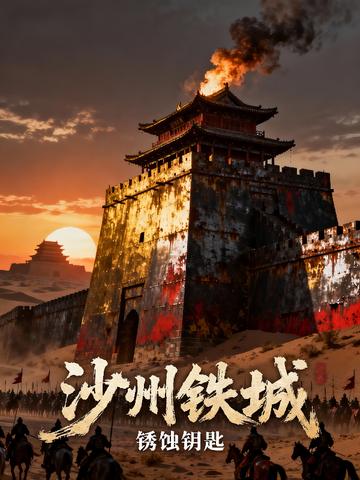


"Shazhou Tiecheng" is a hard-core time travel novel rooted in the historical facts of Shazhou (Dunhuang) in the late Tang Dynasty. It abandons the common "gold-finger" novel mode and constructs a real and tangible plight of the Western Regions with amazing historical evidence. The core of the story is unique, forming a three-dimensional narrative of technology, system, and people's hearts: the surface layer is solid hard-core knowledge such as city building and water conservancy; the middle layer profoundly shows the fierce collision between technology and the interests of vassal towns and clans in the late Tang Dynasty; the deep layer explores ultimate propositions such as the ownership of knowledge and the inheritance of civilization. The structure of the book is rigorous, from surviving in a lonely city to traveling westward along the Silk Road, the plots are interlocking. It is not only a history of the adventures of modern engineers who broke through in ancient times, but also a majestic picture depicting the confrontation between Silk Road civilizations and speculation on technological ethics. If you are tired of superficial crushing and long for an immersive experience in the game of wits, rich history and depth of thought, this work is worth your time.