Hu Majian lives in the Central Plains, the fishy wind of Luoshui rolls into bones, and thousands of miles of fertile fields turn into scorched earth.
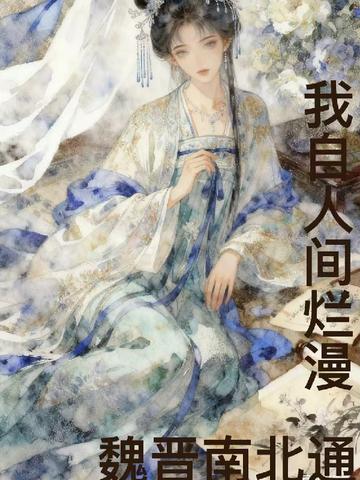
Shen Yan, a refugee, sat up from the pile of dead people. The worn volume of "Shang Jun Shu" in his arms was the only source of his soul to survive the troubled times. There were no tears in his eyes, only the direction of Jiangzuo Jiankang - where there were rich families of noble families, and the possibility of survival was hidden there.
Xiejiawu Fort in Chen County has a high wall like iron, with Xie Mingwei standing at the top of the city. The white dress is stained with frost. She is the second young lady of the master's family, but she grew up in the dust. She can understand the whistling of Jie Nu's scimitar, and she can also count the blood and tears in the account books of Wubao. For refugees like Shen Yan, she could only weigh them in her eyes, like a knife waiting to be sharpened.
South of the Huai River, Jiankang's wind is coming north with the chill of "earth break". In Xie's Mansion in Wuyi Lane, Langya Wang's marriage certificate was already on the desk, and the refugee list she ran across with her fingertips hid a stake that was heavier than the marriage.
Shen Yan clenched the knife tightly. In these troubled times, on the chessboard of the nobles, women are the chess pieces and the refugees are the grass, but he insists on letting the grass get entangled in the hand that wants to lift the chessboard.
The river is surging, and there is no end to it. It is always the blood of ambition and survival.
Reader comments
I think it's well written, but I'm not used to the first-person narrative in the first few chapters, and it's much better after switching to third-person narrative later on.
I think it's well written, but I'm not used to the first-person narrative in the first few chapters, and it's much better after switching to third-person narrative later on.