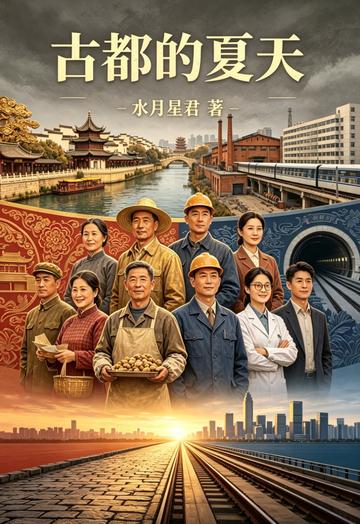
Starting with the liberation of the ancient capital in 1949 and ending with the modern city in 2025, it connects major historical nodes through the trajectory of ordinary citizens and industry development.
In 1949, the Confucius Temple silk and satin shop clerks were eager to be liberated; since then, tenant farmers have acquired land, workers have built factories, self-employed entrepreneurs have started businesses, and scientific researchers have tackled key problems, witnessing the transformation from food stamps to the "One Belt and One Road" initiative, and from tricycles to smart subways.
The novel not only shows the rise of the ancient capital from an industrial town to a city of innovation, but also explores the cultural roots of Qinhuai fireworks and Yun brocade techniques. Through multiple groups of portraits, it interprets the city's "resilience, tolerance, and innovation" spirit, records the resonance of the city and the country, and allows readers to understand China's past and future.