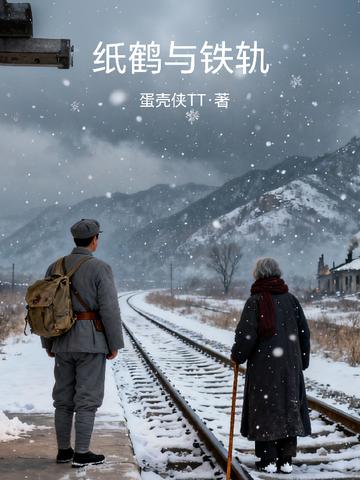
In 1932, when Shanhaiguan fell, Shen Yanqing, designer of the Beijing-Zhangjiakou Railway, and Lin Yan, a girl from the Department of Journalism at Peking University, met again because of the "99 paper cranes" agreement they made when they were young. They wanted to go to Chongli to watch the snow together, but their dreams were torn apart by the torrent of the times - Lin Yan's father Shen Yanqing, who wrote an article calling out "right of road is sovereignty", was assassinated by the Japanese army. Shen Yanqing was forced to join the Nationalist Government's "Railway Bombing Team" and personally blow up the bridge he designed. Lin Yan turned into a reporter to pursue the truth, but was forced to confess by the agents after swallowing a paper crane and becoming mute, jumping off a train and losing her memory. From Peking to Burma, from the Battle of Songhu to the founding ceremony of the People's Republic of China, they repeatedly missed each other in the bombing of bridges and road protection, information transmission and identity misunderstandings: He lost three fingers on his left hand and became blind at night, but he still persisted in "retrieving" the bombed railway; she lost her speech and memory, but insisted on completing the mission of completing her father's posthumous manuscript "The History of Railways in China". Paper cranes are stained with blood, pens are engraved with codes, gloves with severed fingers express feelings, and lipstick prints reflect the flames of hell. Each token hides the regret of "passing by" and the reversal of "resurrection from the dead." It wasn't until the Beijing-Zhangjiakou line was restored in 1949 that the two men once again stood back-to-back on the snowy train platform at Chongli. Whether they would meet again or not was left to the railway track extending into the distance to answer.