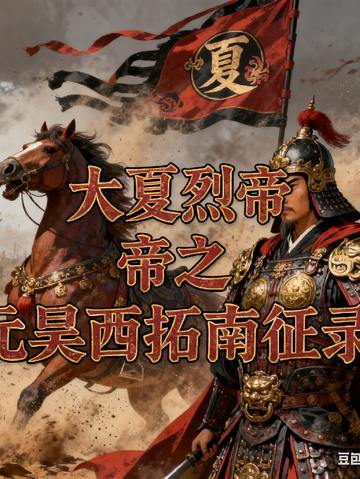
In the 11th century AD, during the confrontation between Song and Liao, Li Yuanhao, a Dangxiang aristocrat, was a young man from Yinzhou and set off a storm in the northwest with the ambition of "restoring Dangxiang's old business and establishing an independent Xia". He refused to wear Song Dynasty clothes, created Xixia script, united the ethnic group with the "Bald Order", swept across Hexi with the Iron Kites cavalry, proclaimed himself the emperor in Xingqing Mansion, and established the country, breaking the monopoly of the Song and Liao powers.
Faced with the military suppression of the Song Dynasty and the diplomatic deterrence of the Liao State, Yuan Hao used "fighting to support war" as an edge - luring the enemy at Sanchuankou and setting up an ambush at Haoshui River, he defeated the Song army and seized grain and grass; at the Battle of Hequ, he forced the Liao army to retreat and eliminated the threat from the north and the south. Then the sword pointed at the Western Regions, using the Gaochang Uighurs to divide the grassland tribes, including the Hexi Corridor to the southern foot of the Tianshan Mountains, and monopolizing the Silk Road's commercial tax; he also led his troops through the Hengduan Mountains, united with Dali, and captured the city, extending his power to the Indo-China Peninsula, and building a huge power network spanning the northwest and southwest.
However, there were undercurrents under the peak: Yuan Hao in his later years was deeply suspicious and cruel. He killed the heroes and abolished the elders and established the younger ones, which triggered the antagonism between father and son and the rebellion of the nobles. The Liao and Song Dynasties took the opportunity to counterattack, and the grasslands of the Western Regions were out of control one after another. Xixia fell from the peak of expansion into internal and external troubles. In the end, this "fierce emperor" died of serious injuries in the bloodbath in the palace, leaving only the imperial mausoleum of Xingqing Mansion and the millennium of disputes over "expansion and governance" and "talent and tyranny" in later generations.
The book uses historical materials as bones and deductions as flesh and blood to restore the rise and fall of the Xixia Empire, show a hero's struggle in power, war and human nature in troubled times, and write a little-known expansion epic in the history of China's northwest and southwest frontiers.