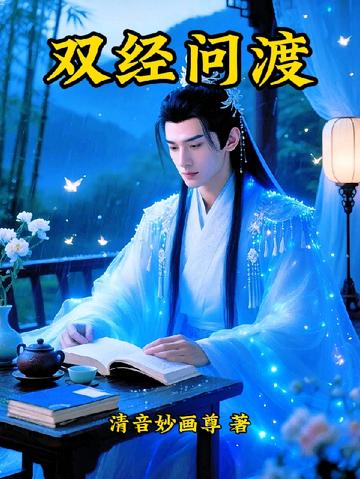
Introduction to "Shuangjing Wendu"
In the early Tang Dynasty, the doctor Dong Cheng (later aliased as Shuang Jingdu) became a miracle doctor. After Dong Cheng, his family studied the "Huangdi Neijing" intensively. However, seeing that "physical illnesses were easy to cure but mental illnesses were difficult to treat" among the powerful, he took his grandfather's handwritten medical books and a volume of the Diamond Sutra to the West. In Guozhou, he relied on the medical theory of "Su Wen" to cure febrile malaria, and also used the "should have no place to live" in the "Diamond Sutra" to resolve the old woman's obsession with losing her child. From then on, he took the name "Double Meridian Crossing", used medicine as a boat and Dharma as an oar, leaving behind the legend of "healing the body and crossing the mind" in the Hexi Corridor.
Time passes to the Kangxi period of the Qing Dynasty. Dong Yantang, a descendant of Shuangjingdu, accidentally discovered the Shuangjing manuscripts left by his ancestors. At that time, epidemics occurred frequently in the south of the Yangtze River. The people were not only suffering from the disease, but also panicked due to the residual fear of the war. Dong Yantang inherited the aspirations of his ancestors, formulated medicines and administered acupuncture according to the "Yin and Yang Harmonization" method in the "Nei Jing", and then used the "Impermanence of All Actions" in the "Diamond Sutra" to appease the people's hearts, and recreated the "double-meridian crossing" method to help the world, so that the wisdom of the double-meridian spanning thousands of years can continue to ferry suffering and deliver peace in the world.