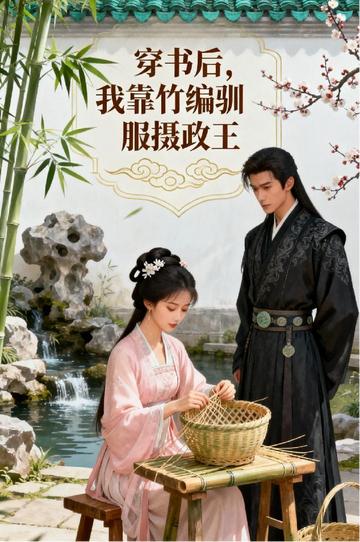
Su Qingyuan, a modern inheritor of the intangible cultural heritage of bamboo weaving, opened her eyes to find herself inside a historical romance novel, as the doomed princess consort about to marry Xiao Jinghan, the villainous regent infamous for slaughtering countless people. In the original story, Xiao Jinghan was cruel and bloodthirsty, and his princess consorts either died or went mad. Su Qingyuan had planned to keep her head down until she could get divorced, but then she discovered that the regent had a peculiar weakness: he couldn’t resist her bamboo weaving.
From then on, life in the prince’s residence took a strange turn:
He confiscated her gold and jewelry, then sent her a whole mansion full of rare purple bamboo.
He never spent the night in her room, yet couldn’t sleep without holding a bamboo mat she had woven.
He never let go of his black iron token, which she had wrapped with nonslip bamboo strips.
The bamboo basket she wove on a whim became Xiao Jinghan’s “exclusive container” for storing weapons. The breathable bamboo mat she made to ease his chronic cold ailment let him sleep peacefully through the night for the first time. Even the regent’s token, a symbol of his power, was wrapped in nonslip bamboo strips by her and became a “personal possession” no one else was allowed to touch.
As the court’s campaign against Xiao Jinghan intensified, Su Qingyuan’s bamboo weaving evolved from “everyday objects” into “lifesaving tools”: bamboo mechanisms blocked poisoned arrows from assassins, hollow bamboo strips carried encrypted messages, and a bamboo framework even formed a secret escape tunnel.
In the end, Xiao Jinghan held her plain, unadorned toolbox, his eyes filled with an obsessive, possessive love. “Others covet my power, but you alone have woven my life and my heart into your own, strand by strand, with your hands.”