Stats
5.8Score
Synopsis
No synopsis yet.
We haven’t got an English blurb for this one. It appears once the source description has been translated.
Reader comments
In booklists 4
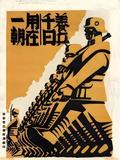
The First Warlord of the Reborn Republic of China Has an Army of 600,000🎉🎉
18.6MViews165Books2dUpdated

Come! Take a Trip to the Republic of China! Top-Notch Literature of the Republic of China!
I want to read a book similar to "People in the Republic of China, from Police Chief to the Most Powerful Warlord". No kidding, it's so pretty! ! !
7.4MViews244Books3dUpdated

Looking for Books About Reform, War, and Revival
Want to watch something like "Magic Mecha War"? No, the torrent of steel! Book. Another world + revolution, fictional history, in short, it is an art student or the October Revolution
1.7MViews284Books16hUpdated
Late Republic of China and Qing Dynasty Type
Are there any pig's feet? In the late Qing Dynasty of the Republic of China, the development of science and technology
751.7kViews163Books5dUpdated
The story uses hard-core industrial deduction and restrained narrative rhythm to open up a new expression path for the theme of national salvation in the late Qing Dynasty. At the beginning of the novel, the author states his original intention of "close to reality and reasonable deduction". This reverence for history and adherence to logic constitute the most distinctive feature of the novel, but it also leaves room for discussion in some dimensions. The core highlight of the novel lies in its realistic interpretation of the "road to national salvation". Different from the "cheating rise" of the protagonists of most time-travel novels, the protagonist of this book - a modern electronic technology expert who passed through the soul of the son of a businessman in the late Qing Dynasty, has always stepped on the soil of the times in his journey to save the country. From establishing a mechanical silk reeling factory to solve the handicraft industry's difficulties, to improving Sichuan and River shipping to open up the logistics network, to establishing the Fuxing Society to connect progressive forces from all over the world, every step was accompanied by compromises and breakthroughs in the social reality of the late Qing Dynasty. The author pays special attention to the restoration of historical details: the technical shackles of the Fourth Textile Bureau, the resource limitations of the Sichuan Machinery Bureau, the industry's slump under the leadership of "Namo Wen", and even the constraints of the imperial examination system on talents. These details make the story get rid of the sense of fiction; and the collision of the modern concept of "science and technology is the primary productive force" with the industrial salvation trend in the late Qing Dynasty, and the ideological confrontation between the protagonist and historical figures such as Yan Fu, Kang Youwei, and Liang Qichao, make the novel go beyond simple fiction. The "counterattack narrative" has become an in-depth deduction of the path to national salvation in modern China. This narrative of "following the trend and taking steps step by step" not only respects the explorations of the sages of the past generations, but also makes the goal of "rich the country and strengthen the army" seem substantial and credible. In terms of character creation and plot advancement, the novel always adheres to the bottom line of "realistic logic". The protagonist does not have a perfect character, and his decision-making is often subject to the conditions of the times and his own cognitive boundaries; the villain is not a "brainless villain" with facial makeup, but a complex individual with the limitations of the times. The establishment of local branches of the Fuxing Society, the promotion of the award craft charter, and the preparation of the electrical laboratory. These seemingly ordinary plots actually connect a complete chain of "industrial foundation building - scientific and technological breakthroughs - ideological emancipation - institutional innovation", transforming the "rise of a great power" from an empty slogan into a tangible practice. This insistence on "hard-core logic" makes the novel unique among similar themes, and is especially suitable for readers who like historical depth and industrial deduction.
The most touching thing about this work is its sincere insistence on "truth". The protagonist is a deep cultivator in the field of modern electronic technology. He is haunted by dreams and falls into the skin of the son of a merchant in the late Qing Dynasty. He has never possessed any extraordinary powers, but relies on professional knowledge that transcends the times and a clear insight into the history of history to find his way forward in the dust of troubled times. From studying the glimmer of electronic tubes at his desk to building the prototype of an electrical laboratory; from sowing the flame of the concept of "promoting the country through craftsmanship" to promoting the implementation of the "Reward Crafts Charter", every step of his rise is firmly anchored in the original intention of "building the foundation of the science and technology industry". We were never eager to overthrow the old order and dominate the industry one by one, but instead stayed true to our original aspiration and deeply cultivated the fertile ground for industry. We visited the sound of machines at Dasheng Cotton Mill, faced the dilemma of the four textile bureaus, and explored the glimmer of industrial breakthrough in the ruins waiting to be renovated. We also used the "Rejuvenation Society" as a link to connect people with lofty ideals at home and abroad, established branches, published papers, and sent students. Through accumulation, we gathered the majestic power to rewrite the times. This narrative texture of "taking small steps to reach a thousand miles" makes the changing trajectory of the years more solid and credible. Every step forward is permeated with the tenacity and accumulated wisdom of Lonely Yong.
In the early years of the Republic of China, the situation was turbulent, and a group of passionate young people struggled to move forward in the wave of the times. The novel depicts their ideals and struggles with delicate brushstrokes, and the figures who are running for the destiny of their family and country vividly appear on the page. They either made impassioned speeches or formed secret societies, searching for light in the darkness and igniting the fire of hope with their youthful blood. The author cleverly interweaves personal destiny with the current of the times, making each character vivid and full of life, with a strong sense of family and country without losing the enthusiasm of youth. The longing for freedom and progress flows through the text, which is heart-warming to read. The stories of those young people who dedicated themselves to their ideals can still touch us today even though they last hundreds of years.
For a textual critic, this book is rare. The author has made great efforts to collect historical details, from street markets to old customs, from the social development status of the early modern economy to the coping methods of civilian workers, from the rise of modern media to the various attempts of the reformists, as well as the leading directions of industry at that time and the various aspects used in Western learning... They are among the top ones I have read so far that have detailed research and clear ideas! I admire the author for having such a down-to-earth writing mentality! From the story point of view, the enthusiasm of this book is restrained and restrained. It thinks about the changes of the times and the best way out on a reasonable basis, and does not put forward arbitrary opinions without reason. It has the demeanor of a scholar, which really poked me! A Dream of Huangliang, the changes in the world, and the return to the journey of history. It is a story that makes people excited and hard to calm down!
"A Pillow of Yellow Liang in Another Time and Space" is a rare "anti-shuangwen" historical time travel novel. It abandons the common cheating and system flow, and chooses to use a deduction close to reality to construct the story of saving the country in the late Qing Dynasty. The protagonist, as a modern electronic technology expert, travels to the son of a businessman in the late Qing Dynasty. He does not cheat and counterattack overnight, but is down-to-earth. From opening a machine reeling factory to improving Sichuan and River shipping, every step is rooted in the soil of the times. The author is very careful in restoring historical details. From the technical limitations of the Fourth Textile Bureau to the resource dilemma of the Sichuan Machinery Bureau, the story is full of reality. This kind of "following the trend" narrative not only respects the explorations of historical sages, but also makes the goal of "rich country and strong military" seem substantial and credible.
Historical novels are like a bridge across time and space, re-spreading the dusty years in front of readers. The outlines that have been polished and blurred by time become vivid and clear again under the author's pen. The power games of emperors, generals and ministers, and the joys and sorrows of ordinary people are all vividly displayed on the page in delicate brushstrokes. Every carefully designed detail is a key to the past; every ups and downs of the plot is the beating of the pulse of history. The author uses words to recreate the lost scenery, allowing readers to touch the temperature that has long since cooled down. When I close the book, those characters and stories are still lingering in my mind, as if we have really traveled through time and space and experienced those magnificent years. This is the most touching charm of historical novels.
I discovered this in-depth historical time travel novel based on realistic logic. The author cleverly avoids the cliches of cool writing and allows an electronic technology expert to travel back to the late Qing Dynasty and use his professional knowledge and business acumen to build an industrial system from scratch. The writing style of the novel is both rigorous and humorous, with careful historical research without losing the vividness and smoothness of the narrative. The book does not have the blessing of a systematic golden finger, but it naturally unfolds a passionate picture of a prosperous country and a strong army in its plain advancement, showing the reasonable collision between modern technology and the background of the times. This is not only a reverence for history, but also a serious exploration of the theme of "time travel". Very cool, very good looking, looking forward to exciting follow-up, [Like]
A good novel is like a treasure. Once you open the title page, you step into an unknown secret realm. There are countless surprises hidden between the lines, the plot twists and grows like vines, and the characters shine like stars. The author uses delicate brushstrokes to outline the three-dimensional world, every detail is carefully polished, and every dialogue contains hidden secrets. The story is sometimes like a gurgling stream, sometimes like a stormy wave crashing on the shore. Readers can experience a variety of life experiences in the ups and downs. Those exquisite foreshadowings bloom at the end, which is amazing; those profound philosophies flowing in the plot make people ponder. Wonderful novels are not only entertainment, but also a feast for the soul, allowing readers to linger in the palace built by words.
Tired of the routine of time travelers killing everyone at every turn? This time-travel novel about the late Qing Dynasty without gold fingers is worth reading with your eyes closed! The protagonist starts out as the son of a businessman and uses modern scientific and technological knowledge to solve the industrial dilemma and logistics problems in the late Qing Dynasty. There is no chance in the whole process, only solid resource integration and logical deduction. The author pays special attention to the restoration of historical details, from technical shackles to industry stagnation, from the shackles of the imperial examination system to the collision of progressive thoughts, every detail makes the story get rid of the sense of overhead. Watching the protagonist's ideological confrontation with historical figures and building an industrial system step by step, the sense of accomplishment of "following the trend and making progress step by step" is far more fascinating than mindless fun [like][like][like][like].
This time-travel novel in the late Qing Dynasty breaks away from the routine of traditional novels, and its unsystematic and cheat-free setting is particularly eye-catching. The protagonist uses modern scientific and technological knowledge to work step by step in the late Qing Dynasty. From the process of accumulating strength to building an industrial system, the author has done solid historical research and the details are very detailed. The seemingly plain narrative contains the core of enriching the country, strengthening the army, and averting the country's humiliation. It has a rich sense of history and an attractive plot. Although it is being serialized, it is enough to make people willing to follow up and wait for the follow-up.
The novel combines the scenes of the late Qing Dynasty, the difficult exploration of industry, the collision of ideas, and the pain of social change, allowing readers to appreciate the all-encompassing charm of the content as they follow the protagonist on his journey to save the nation. The rich content of the novel is first reflected in the multiple interweaving of plot lines. The protagonist's road to national salvation has never been limited to a single dimension, but has constructed a three-dimensional development path with "industry as the foundation, technology as the wings, thought as the soul, and organization as the bone". The diverse shaping of characters and forces makes the content of the work more comprehensive. The novel does not limit the characters to the simple framework of "protagonist + supporting role", but constructs a group of characters covering different classes, positions, and ideas. In addition, the richness of the novel is also reflected in the heavy presentation of themes and details. These details not only restore the social scene and humanistic atmosphere of the late Qing Dynasty, but also make the grand theme of national salvation a tangible and knowable concrete plot, so that the richness of the work is not just superficial, but has both breadth and depth.
This novel's grasp of historical knowledge is impressive. The author restores the style of the times with a rigorous attitude, from clothing and food to rules and regulations, everything is exquisite and precise. The seemingly random conversations in the streets hide the precise capture of historical details; the characters' movements reflect the thinking imprint of a specific era. What is particularly rare is that the author turns the complex historical materials into a vivid narrative, which not only retains historical truth, but also gives it literary charm. Those classics and stories that are cleverly woven into the plot not only do not hinder reading, but also make the story more textured. This ability to perfectly integrate academic depth and artistic expression can be regarded as a model for historical novel creation.
The narrative method is calm and thoughtful, the story is very strong, and the understanding of the historical development process is extremely clear. It is of great significance as a teaching subject, but it is too peaceful and obviously lacks the tension and impact of the conflict between the pros and cons of the novel. It is very, very good to do a good job in teaching to strong line teaching and understanding history. As a transmission, it is very suitable for guidance. However, as a mainstream novel, this shows that there is not enough tension, and there are too few conflicts, suspense, foreshadowing, and plot ups and downs. The characteristic of this book is that it is super understanding of events and the knowledge of the text is very accurate. Those who are studying in middle schools may wish to keep it as an aid and a great help in understanding the history! Big, appropriately increase the control of foreshadowing, events, and conflicts, and it will be more exciting. Come on and work hard. Never forget the original intention[Like][Like][Like][Like][Like]
[Five Star Recommendation] "Pillowing on a Yellow Beam in Different Time and Space" is a rigorous, profound and unique work about history, time travel, the Qing Dynasty, and imperial examinations, jointly created by the writer Tian Li. The protagonist Huang Liang (modern electronics expert Soul Crossing) has a pragmatic and sober personality. He is caught up in the changes in the late Qing Dynasty. With his professional knowledge and business wisdom, he gradually accumulates strength for the camp amidst realistic constraints. The core theme of the work is "Abandoning literary routines, staying close to historical logic, and exploring the path to a rich country and a strong military through solid industrial deductions and system construction." The most recommendable thing about it is that the author treats history with awe, is unsystematic and has no golden fingers, and relies entirely on rigorous research and reasonable deduction to unfold the narrative, giving the time-travel subject a rare sense of reality and ideological depth. It is a thick and thought-provoking hard-core historical text. History cannot repeat itself, but if there are pillars like "Huang Liang", it will be a great blessing for the country! The work is great, I will continue to read it [Like][Like][Like]
The most moving feature of this novel is its insistence on the boundary between historical logic and reality. The protagonist does not act recklessly with a golden finger, nor does he mindlessly crush with a domineering spirit. Instead, he carries the knowledge of future generations, is trapped by the limitations of the times, and is subject to social rules, accumulating resources and building an industry step by step. From the establishment of the Fuxing Society, the implementation of the craft regulations, to the preparation of the electrical laboratory, there are no miracles that can be achieved overnight, only pragmatic exploration that is consistent with history, which not only respects the struggle of the sages of the past generations, but also makes the goal of "rich country and strong military" lose its emptiness and become solid and credible. This anti-routine setting makes the story break away from the impetuousness of fast-food reading and add a bit of depth that a historical time travel novel should have.
It was a big surprise to find such a literary creation in Tomato. This book is rich in content and skillfully combines science and history. The protagonist uses electronic knowledge to solve the dilemma of handicraft industry, improve Sichuan and River ships, and promote industry to save the country. The story is rooted in the soil of the times, delicately restoring realistic dilemmas such as resource limitations and industry stagnation, and demonstrating the core concept of "technology is productivity" in compromise and innovation. It is thick and powerful without losing its spirit. It can be called a hard-core time-travel masterpiece. I like it, it's worth savoring [Like]
With a hard-core setting of "no system, no golden fingers", the novel breaks out of the cliché framework of "time travel means invincibility", and uses detailed deductions that are close to reality to compose a tragic song of a rich country and a strong army in the late Qing Dynasty. It not only respects the depth of history, but also demonstrates the power of knowledge and industry. The content is very exciting.
The introduction to this novel says that it is a time-travel novel, but when you read it carefully, it doesn't feel like it is time-travel at all. Instead, it has a sense of historical depth. It abandons the cheats and systems that are common in time travel literature, and uses strong technical knowledge to describe the industrial system that could be established in the special era of the late Qing Dynasty in the protagonist's experience. The knowledge and theory involved are all-encompassing, which shows that the author attaches great importance to history and has a deep understanding of science and technology. The author has profound writing skills and profound knowledge. The whole story is logical and the various systems involved are very close to the environment at that time. It is really a rare and good article.
A masterpiece for history lovers! But it is also a novel that is not popular with the public. There aren't that many harem romance stories, and there's even a lot of pretense and slaps missing. Some are just the passion of patriots! I was impressed by the author's profound background! This book should not be buried
This is a time-travel masterpiece that breaks out of the "shuangwen" framework. With deep respect, the author depicts the protagonist's true journey of carrying forward in the predicament of the late Qing Dynasty. There is no myth of personal heroism, only a heavy exploration of dancing with the limitations of the times. The book's respect for the sages and the presentation of the complexity of change give the story a rare sense of weight. Highly recommended to readers who pursue historical depth and realistic logic.
This novel is very rigorous. How rigorous is it? The time, characters, nodes, and events are all very sophisticated. When I first opened this book, I thought it was about time travel and Huang Liang Yimeng's fantasy. But after I finished reading it, I found that the author used the most simple and unpretentious pen and ink to describe modern events. In terms of timeline and events, the author is really rigorous, so rigorous that it is almost as rigorous as a history book, and may be even more detailed. It always seems to make me feel like I am taking an online class. Of course, the portrayal of the protagonist Huang Liang is also very profound. He is not fighting for personal gains and losses and interests. He has the foresight of a time traveler and the caution of a small person of that era. He does not dominate one party as soon as he comes. One of the words he often says is "empty talk will harm the country, but hard work will prosper the country." Even now and in the future, this sentence is absolutely wise. In such troubled times, watching Huang Liang work hard and work hard to save the generals of that era is sometimes heart-breaking to read. The author uses such simple and professional words to attract people.
The road to rebirth was crowded with Internet tycoons, all of whom were either gold-fingered or god-like. Finally, I saw a shirtless person [laughing and crying] [laughing and crying]. However, the memory is still there. The knowledge of modern people is that gold fingers are cheats. Let's see how the protagonist takes up the responsibility in that era, builds the backbone of national rejuvenation along the way, and resists foreign powers from encroaching on the country... The author is knowledgeable, writes fluently, and tells the story as if he has experienced it himself. It is a good book with personal characteristics, worth reading and recommending.
The subject matter is novel and the author's imagination is wide-open. He opens up the reform and innovation in the late Qing Dynasty and the early Republic of China from a different perspective. The protagonist Huang Liang shoulders the heavy responsibility of revitalizing China. It opened my eyes and greatly increased my knowledge. It is a good book and worth recommending [Like][Like][Like][Like]
I have read too many cool articles about time travel with the system. I no longer feel happy, but I feel impetuous. Apart from paralysis, what else can the drama do? There should still be enough respect for history. This time travel article is uncharacteristically uncharacteristic in that it does not pursue simple pleasure, but is based on reality, performs reasonable interpretations, and gradually achieves success. This kind of pleasure makes readers feel reasonable and have a sense of accomplishment. A very good book, worth recommending. I look forward to more exciting chapters in the future. The protagonist gradually expands the layout, the plot gradually gets better, and it becomes a bit interesting.
The novel abandons the cliches of mindless novels, and does not have an exaggerated plot with a golden finger that can decide the world with one word. The protagonist uses modern knowledge as a blade to survive step by step in the era of poverty and weakness: from establishing industrial foundations and technological innovations to building societies and preparing for the construction of electrical laboratories, rigorous industrial deductions and historical details are used to implement "the plan to save the nation". The narrative is restrained and steady, less passionate and noisy, and more historical and rational. The rise of a great power is no longer an empty slogan, but a tangible and arduous practice.
"Sufficient respect for the sages of the past generations", the author really did it! "A Pillow of Yellow Liang in Different Time and Space" breaks out of the framework of a cool novel and does not allow the time traveler to become the only savior to change history. Instead, it shows the difficulty and gravity of the road to national salvation. The protagonist does not have a perfect character, and his decision-making is limited by the conditions of the times; the villain is also non-facial and carries the limitations of the times. This sense of reality makes the story particularly moving - it allows us to see that the prosperity of the country and the military in the late Qing Dynasty was not the result of one person's "cheating", but the result of countless people groping in the dark. Readers who like historical depth and realistic logic will definitely be moved by the sincerity of "talking about oneself". [Praise]
This is a historical time travel novel in the late Qing Dynasty. The male protagonist Huang Liang has no system and no golden fingers. He gradually accumulates strength, integrates resources, rejuvenates the country through science and technology, and makes the country rich and powerful! The novel has both a sense of history and an attractive storyline! The author's writing is smooth, his ideas are clear, and his descriptions are spot on!
"A Pillow of Yellow Liang in Different Time and Space" breaks away from the grand narrative of traditional historical texts and perfectly integrates solid historical research and delicate literary expression. It not only loses the weight of history, but also has the appeal of novels. It not only avoids the boringness of pure historical materials, but also abandons the suspension of mindless fiction, and finds an excellent balance between academic rigor and public readability. It breaks the shackles of disciplines and reading inertia, allowing readers to immerse themselves in rational reading and emotional empathy. Such a thoughtful work deserves to be seen and praised by more people!
There are two things I admire about this novel. The first place is the entire plot. A modern electronic technology expert travels to ancient times, and then uses his professional knowledge to accumulate resources and build a modern technology industry. This time-travel plot can be said to be very novel and unique. The second place is the author's ability to control language. The writing style of the whole novel is lively and interesting, with liveliness in the humor and seriousness in the seriousness. This special style made me read it and couldn't stop reading it.
This novel "A Pillow of Yellow Liang in Another Time and Space" is refreshing with its "anti-routine" creative concept. It abandons the protagonist's aura and "golden fingers" that are common in time-traveling novels, and allows a modern electronic technology expert to accumulate down-to-earth experience in the late Qing Dynasty, and his path to industrial rejuvenation is more real and profound. This respect for the complexity of history and the pursuit of "reasonable deduction" make the story not only a carnival of personal heroism, but also an exploration full of hardship and speculation, injecting rare depth and sincerity into the theme of historical time travel. Highly recommended [like] [like] [like]