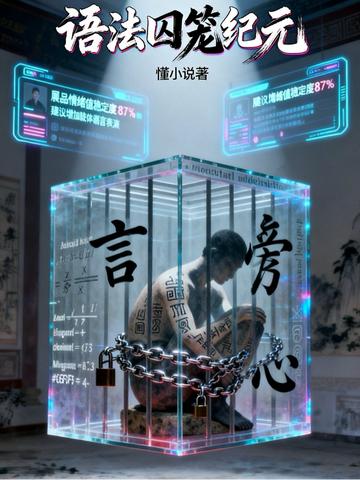
In the middle of the 22nd century, gene editing technology went out of control and gave birth to "new humans" - a group of people who have been perfectly genetically modified, with stronger physical strength, intelligence and lifespan. The "old humans" who evolved naturally are regarded as "endangered species" with genetic defects. In the name of "species protection", the New Humanity government has established 12 "Old Humanity Sanctuaries" (actually large zoos) around the world, where the remaining old humans will be kept in captivity for the new humans to watch and study.
The story revolves around Chen Yan, a linguist from the Old Humanity: Because she is proficient in 37 endangered human languages (including Basque, Ubiq and other isolated languages), she was forced to be appointed by the New Humanity as the commentator of the "Old Humanity Zoo". She is responsible for "popularizing science" to visitors about the "physical characteristics", "social habits" and "remnants of civilization" of the Old Humanity. Chen Yan, who appears to be obedient on the surface, secretly uses linguistic knowledge to embed encrypted information in commentary, exhibit labels, and park broadcasts to connect the old humans in each reserve and build a resistance network that transcends isolation.
Core themes:
• Reverse doomsday: Human beings are reduced from the leaders of civilization to the "viewed", exploring the definition of "human nature";
• Language is power: When language is disciplined by the ruling class, the dying "useless language" becomes the ultimate weapon of resistance;
• Existential crisis: In a world reconstructed by AI and genetic technology, how do "imperfect" old humans prove their value for existence.