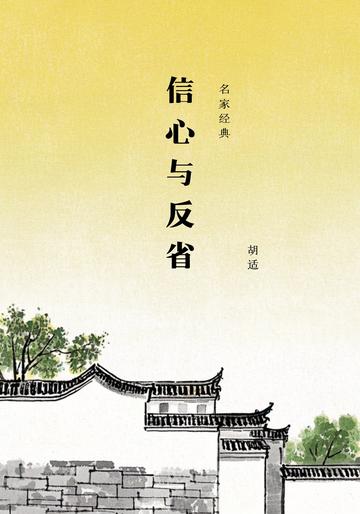
"Confidence and Reflection" is Hu Shi's spiritual monologue during a period of cultural crisis and ideological transition. It is also a collection of ideological essays that touches the pulse of the times. The book takes "confidence" and "reflection" as its core and responds to the proposition of national self-confidence put forward by the then young man "Shousheng" in his article "We Must Have Confidence." Hu Shi sharply pointed out in "Confidence and Reflection": If confidence is based on empty boasting and traditional beautification, it will float on loose sand; true national self-confidence must first go through deep introspection and admit the sins, shortcomings and losses in tradition.
In the chapter "The Road We Should Take", Hu Shi tells that young people should "cultivate themselves" first before they can "love others". He uses the story of the woman Nora in Ibsen's play to leave home and become independent to show that if a person cannot be responsible for himself, he is not qualified to take on the important task of changing society. He also quoted the plot of the doctor in "The National Enemy" who insisted on telling the truth, emphasizing that between public and private, reality and ideals, one should have the courage to isolate himself for the truth, and have no regrets even if he is isolated.
The whole book is not only Hu Shi's in-depth thinking on traditional culture, Western civilization, national weaknesses and the path to self-improvement, but also allows readers to see the mental journey of a thinker who is struggling to find "confidence": faith must not only be firm, but also be based on honest reflection and rational criticism.