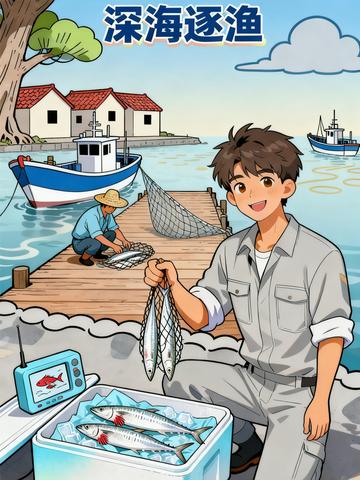
Three years ago, longing for the sea, he left his hometown and hit one dead end after another at a seafood company in the city. Three years later, he returned with a half-worn backpack. Looking at the old fishing boat his father had spent ten years repairing and the new streaks of white in his mother's hair, he finally made up his mind: he wasn't leaving again. He would carve out his own path on the sea that had raised him.
There was no rebirth cheat, no opportunity falling from the sky. All Chu Hang had was an eye for reading the waves, the fishing skills his father had taught him by hand, and the seafood porridge his mother always warmed up at dawn. He wanted to refit the old boat with a new engine and fish finder. He wanted to try selling seafood through livestreams, so city dwellers could put freshly caught seafood on their tables the very same day. Most of all, he wanted the quiet fishing village to ring once more with the lively sound of boat horns.
As they repaired the boat, his father squatted beside it and showed him how hard to hammer each nail, every strike carrying the wisdom of years. While preparing for the livestream, his mother brought out a piece of white cloth she'd kept tucked away, washed it twice, then spread it on the table for the catch. “People need to see that it's clean,” she said. Even his usually taciturn father blushed when facing the camera for the first time and said, “All the fish we sell are freshly caught.”
From livestreaming their trips to sea at five in the morning to packing orders for the refrigerated delivery truck in the afternoon; from the occasional “Looking forward to it” in the livestream chat to more and more returning customers saying “I'll take another two pounds”; from the nearby waters twenty kilometers from the village to the faraway blue depths, Chu Hang, with his family's support, gradually turned “Chu Hang's Seafood Courtyard” into a household name.