Looking for a Book About My Childhood Sweetheart on Campus?
The male protagonist and the female protagonist are both authors, but neither side knows it. The male and female protagonists are childhood sweethearts and enemies, and both have vests. I saw it on another account before, but I can't find it now. Please look for it, I really can't find it.
3kViews56Books8moUpdated
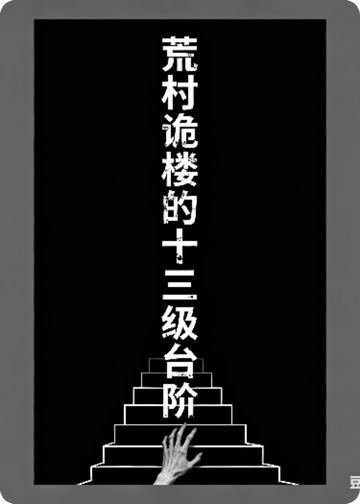





The Shadow of the Desolate House, Obsession to Return to Peace——Self-review of "The Thirteen Steps of the Desolate House in the Desolate Village" "The Thirteen Steps of a Strange House in a Deserted Village" is a suspenseful healing story that I created based on the secret realm of a deserted village, obsession with shadows, regretful redemption, and the dark side of the human heart. Deep in an abandoned deserted village, a mysterious building stands quietly. The thirteen steps in the building appear repeatedly and never end, becoming a nightmare that haunts the protagonist. It also brings out the sins, missed redemption and deep-seated guilt in the building. I abandoned the deliberate bloody thriller and used the cycle of thirteen steps as a clue to depict the desolation of the deserted village, the gloominess of the mysterious building, and the coldness of the steps with cold and silent brushstrokes. I depicted the protagonist's journey into the mysterious building to explore the truth, face his inner fears and past mistakes, and finally reconcile with regrets. The thirteen steps are the cycle of obsession, the prison of the past, and the path to redemption. Each step is engraved with a broken past, hiding unatoneable sins and unsaid apologies. The people in the story are trapped in the cycle of steps, turning their mistakes into obsessions and torturing themselves repeatedly, thinking that escaping will bring peace of mind, but they don't know that the shadow of the steps is just the reverberation of their hearts that refuse to let go. As the protagonist steps on the stairs again and again, he gradually understands the nature of the stairs - it is never a curse, but a mirror that forces you to face the past. What I want to convey is: the desolation of deserted villages will eventually be healed by time, and the cycle of steps will eventually be broken by courage. It is inevitable that there will be irreparable mistakes in life. There is no need to be trapped in a cycle of self-condemnation. Only by facing regrets and taking responsibility for the past can we get out of the cage of thirteen steps, let the shadow of the mysterious building dissipate, and regain inner peace and salvation. The Shadow of the Desolate House, Obsession to Return to Peace——Self-review of "The Thirteen Steps of the Desolate House in the Desolate Village" "The Thirteen Steps of a Strange House in a Deserted Village" is a suspenseful healing story that I created based on the secret realm of a deserted village, obsession with shadows, regretful redemption, and the dark side of the human heart. Deep in an abandoned deserted village, a mysterious building stands quietly. The thirteen steps in the building appear repeatedly and never end, becoming a nightmare that haunts the protagonist. It also brings out the sins, missed redemption and deep-seated guilt in the building. I abandoned the deliberate bloody thriller and used the cycle of thirteen steps as a clue to depict the desolation of the deserted village, the gloominess of the mysterious building, and the coldness of the steps with cold and silent brushstrokes. I depicted the protagonist's journey into the mysterious building to explore the truth, face his inner fears and past mistakes, and finally reconcile with regrets. The thirteen steps are the cycle of obsession, the prison of the past, and the path to redemption. Each step is engraved with a broken past, hiding unatoneable sins and unsaid apologies. The people in the story are trapped in the cycle of steps, turning their mistakes into obsessions and torturing themselves repeatedly, thinking that escaping will bring peace of mind, but they don't know that the shadow of the steps is just the reverberation of their hearts that refuse to let go. As the protagonist steps on the stairs again and again, he gradually understands the nature of the stairs - it is never a curse, but a mirror that forces you to face the past. What I want to convey is: the desolation of deserted villages will eventually be healed by time, and the cycle of steps will eventually be broken by courage. It is inevitable that there will be irreparable mistakes in life. There is no need to be trapped in a cycle of self-condemnation. Only by facing regrets and taking responsibility for the past can we get out of the cage of thirteen steps, let the shadow of the mysterious building dissipate, and regain inner peace and salvation. When the protagonist first steps into the mysterious building, every time he steps on the steps, he is accompanied by a biting chill and lingering fear. The thirteen steps are repeated in a loop, as if there is no end, trapping him in the abyss of self-condemnation. His cowardice and selfishness at a young age indirectly caused an irreparable tragedy. In the years that followed, this mysterious building and the endless stairs became a nightmare that he could not escape from. He thought it was a punishment from fate, but he never thought that it was a shackles in his heart. After countless cycles, he began to stop escaping, and instead calmed down and listened to the subtle echoes from the steps. The details he had deliberately forgotten and the apologies he had never said slowly emerged in the lines of the steps. He finally understood that the existence of the mysterious building and the cycle of steps were never for punishment, but to allow him to face his mistakes and complete his belated redemption. When he expressed the guilt and apologies he had accumulated for many years to the deserted building, the cyclical steps finally came to an end. The end of the thirteen steps was no longer an endless repetition, but a light leading to the outside world. The wind in the deserted village blew past the window lattice of the strange building, blowing away the years of haze, and the coldness of the steps was gradually replaced by warmth. I hope readers can understand from this story that real redemption is never about escaping from mistakes, but about bravely facing the darkness within; those obsessions and regrets that trap us are just inner self-imposed limitations. As long as we are willing to let go of escape and face the past, we can break the prison of the cycle, free our souls, and let gentle flowers bloom again in the barren years.