(The first time I wrote it, it was more realistic. If it was the first time I read this style, I would be uncomfortable with the protagonist being a military fan.) Introduction to the novel "The Rusty Iron Cross"
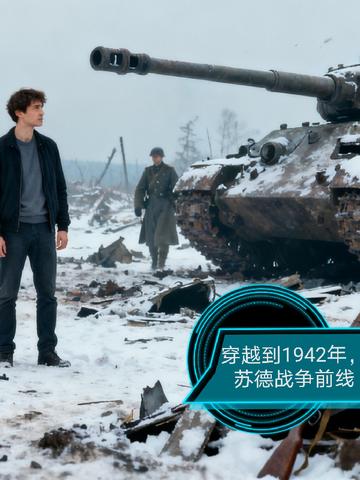
Zhang Yuan, a junior student in the history department, was studying a rusted soldier's ID marked "Alfred Schulz" and belonging to the German 162nd Infantry Division in the museum. He encountered an accident when he touched a strange scratch on the edge of the ID. He actually traveled to the Stalingrad battlefield in 1942 and became the owner of this soldier's ID - an ordinary German soldier in desperate situation.
At that time, the 162nd Infantry Division was on the verge of being sieged by the Soviet army. Cold winter, hunger, artillery fire and low morale enveloped everyone, but Zhang Yuan clearly remembered that this unit would eventually be annihilated in this tragic battle. In order to survive and to escape the known fate of death, he struggled to gain a foothold in the hail of bullets as a "replacement soldier".
When the team was about to enter a canyon ambush set by the Soviet army, Zhang Yuan, who was familiar with the history of the war, took the risk to warn the enemy. However, due to the suspicious source of the intelligence, he was regarded by the officers as disturbing the morale of the army, and his life was in danger. After fortunately relieving the crisis, he had to risk everything, relying on historical knowledge and on-the-spot responses to navigate the cruel battlefield, hiding the secrets of time travel while trying to guide the team to avoid the trap of destruction.
On the Eastern Front battlefield where blood and fire are intertwined, human lives are like straw, and honor and curse coexist. Holding the rusty Iron Cross badge on his chest, Zhang Yuan changed from a bystander of history to a struggler in the chess game. Not only did he have to survive in the cold, hunger and artillery fire, but he also had to face unknown risks that would change the trajectory of history, as well as the difficulties between stance and humanity.
Reader comments
I was very confused. Isn't the protagonist anti-war? Why did you join the Soviet army in a daze? According to normal logic, after finally leaving the front line, you should not try your best to hide and wait for the war to end, but also actively participate in the battlefield, feeling that you have the status of a protagonist. Won't die? After finally surviving, normal people's reaction would be to hide first, because the protagonist is German, and the protagonist's actions are not called traitors. Even if the protagonist thinks it doesn't matter, the protagonist's German family members don't mind the protagonist's actions?
I have briefly read about ten chapters. The first few pictures were in the third person and then changed to the first person after the fifth chapter. I couldn't get used to it so I removed it. If you don't mind this, you can support the author.
I was very confused. Isn't the protagonist anti-war? Why did you join the Soviet army in a daze? According to normal logic, after finally leaving the front line, you should not try your best to hide and wait for the war to end, but also actively participate in the battlefield, feeling that you have the status of a protagonist. Won't die? After finally surviving, normal people's reaction would be to hide first, because the protagonist is German, and the protagonist's actions are not called traitors. Even if the protagonist thinks it doesn't matter, the protagonist's German family members don't mind the protagonist's actions?
I have briefly read about ten chapters. The first few pictures were in the third person and then changed to the first person after the fifth chapter. I couldn't get used to it so I removed it. If you don't mind this, you can support the author.