(This was my first attempt at a more realistic style. If you haven’t read this kind of story before, you may find it strange that the protagonist is a military enthusiast.) Introduction to The Rusted Iron Cross
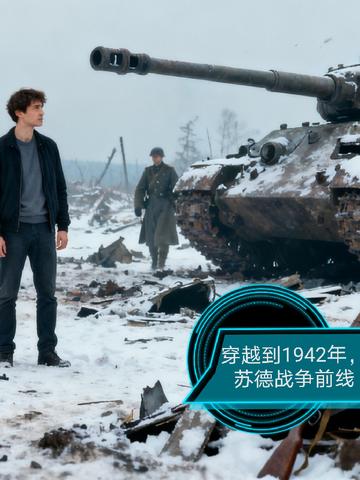
Zhang Yuan, a third-year history student, is examining a rusted soldier’s identification tag at a museum. It bears the name “Alfred Schultz” and belonged to the German 162nd Infantry Division. When he touches a strange scratch along its edge, an accident sends him transmigrating to the Battle of Stalingrad in 1942, where he becomes the tag’s owner: an ordinary German soldier trapped in a desperate situation.
At the time, the 162nd Infantry Division is on the verge of being surrounded by Soviet forces. Winter, hunger, shellfire, and flagging morale weigh on every man. Zhang Yuan remembers clearly that the division will ultimately be wiped out in this brutal battle. Determined to survive and escape the death he knows awaits him, he struggles to establish himself under the guise of a replacement soldier amid a hail of bullets.
When the unit is about to enter a ravine where Soviet troops have laid an ambush, Zhang Yuan, well versed in military history, risks warning them. But the officers consider his suspicious source of information an attempt to undermine morale, leaving his life hanging by a thread. After narrowly averting disaster, he has no choice but to stake everything, relying on his historical knowledge and quick thinking to navigate the merciless battlefield. He must conceal his secret while trying to steer the unit away from its doom.
On the Eastern Front, where blood and fire intertwine, human lives are cheap, and honor and damnation go hand in hand. Clutching the rusted Iron Cross badge against his chest, Zhang Yuan has gone from an observer of history to a pawn struggling within its game. He must not only survive the bitter cold, hunger, and shellfire, but also face the unknown risks of changing history’s course, and the painful choices between allegiance and humanity
I was very confused. Isn't the protagonist anti-war? Why did you join the Soviet army in a daze? According to normal logic, after finally leaving the front line, you should not try your best to hide and wait for the war to end, but also actively participate in the battlefield, feeling that you have the status of a protagonist. Won't die? After finally surviving, normal people's reaction would be to hide first, because the protagonist is German, and the protagonist's actions are not called traitors. Even if the protagonist thinks it doesn't matter, the protagonist's German family members don't mind the protagonist's actions?
I have briefly read about ten chapters. The first few pictures were in the third person and then changed to the first person after the fifth chapter. I couldn't get used to it so I removed it. If you don't mind this, you can support the author.