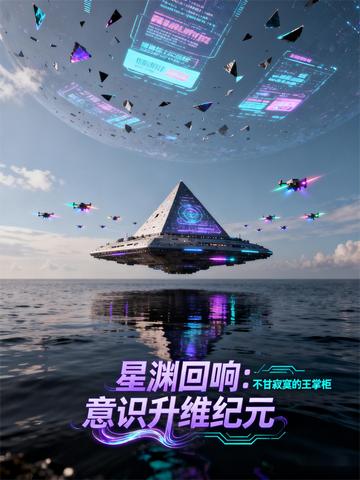
On the summer solstice of 2230, in the constant-temperature laboratory of the Zhongguancun Quantum Computing Center in Beijing, Jiang Ning's fingertips passed across the holographic interface of the "Consciousness Anchoring" system, and blue light particles fell along his fingers. His father, Jiang Ze, stood in front of the particle collision simulation device. His white coat was still stained with the quantum ink that was splashed when debugging the equipment last night. The silver-blue traces were like what he often said was "the blank space left by the universe to mankind."
"Basic physics has been stagnant for 127 years, Ning Ning." Jiang Ze suddenly spoke, his voice wrapped in the buzz of the laboratory's circulation system. "We are like bees trapped in a glass cover. We can see the starlight outside the solar system, but we cannot break through the cage woven by formulas."