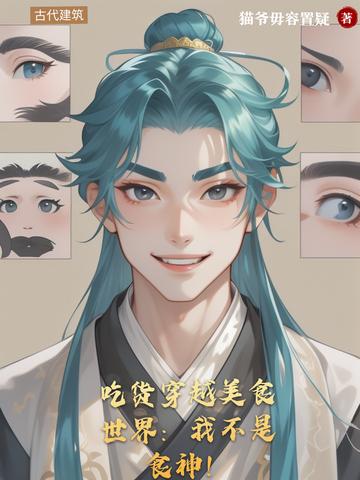
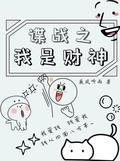
A Foodie's Transmigration to a World of Cuisine: I'm Not the God of Food!
吃货穿越美食世界:我不是食神!
- Status
- Ongoing
- Length
- 336k Words
- Genre
- Historical
- Subgenre
- Historical High-Concept
- Updated
- 8mo ago
- Source
- Fanqie
Synopsis
152Chapters
975Reads · all time
More by this author
 No Dog Would Join the Elite Class: A Middle Schooler's Confusion of Youth
 Shadows in a Steel Shell: The Sorrows of Adulthood
 Nightmare in the Dark: My Beautiful Newlywed Wife Is Threatened by Thugs
 The Good-for-Nothing's Rules for Survival
 Code Embers: The Bitter Tears of a Middle-Aged Programmer Who Lost Heart
 Transmigrating to the Ming Dynasty: Nephew, You're So Sweet. Fourth Uncle Will Spoil You Rotten
 The First Emperor Is Fuming: I Teach Prince Fusu Not to Eat Beef
 Transmigrating to the Tang Dynasty: Father, Your Majesty Shimin, Call Me Your Majesty
 Great Song: I Become General Yue Fei Before His Assassination!
 Eastern Han and Three Kingdoms: Cao Cao, I Won Big at the Battle of Red Cliffs
 My Whole Family Are Industry Elites, While I Lie Flat as a Good-for-Nothing!
 Everyone in Dorm 748 Is Dead. I Nearly Peed Myself and Called the Police at Once!
In booklists 1
Reader comments 51
Translated by Google Translate
Food-driven novels are really my favorite. I highly recommend them! From cold chicken breast to "fake god of food": Zhang Tianyang's taste journey hides the dual warmth of history and human feelings. When Zhang Tianyang was chewing on the bland cold chicken breast, he would not have thought that the "food traceability system" would completely rewrite his life - not a "God of Cookery" script that would reach the sky in one step, but with the acumen of modern foodies and the half-baked confidence in "food analysis", he would fall into the ancient world of "food is respectable". In a desperate counterattack, he would stew the weight of history and the warmth of human feelings into each dish. When he first came to another world, he encountered the crisis of being expelled due to his poor cooking skills. Without hesitating, he improved the dishes with modern seasoning logic and gained a foothold in the admiration of the lower-class diners. At the banquet, he accidentally made the improved braised pork to resolve the difficulties of the powerful. The title of "God of Cookery" was caught off guard and became a shackle, attracting challenges from peers and attracting influence. In order to cover up his shortcomings in cooking skills, he followed the system prompts and searched for aged soybean soup in the alleys of Bianjing in the Northern Song Dynasty, and cooked it with saltpeter. When he asked Su Shi for advice on Dongpo pork, he carefully studied the relationship between heat and mood; In this taste journey, the most touching thing is never the illusion of the "God of Food" halo, but the human feelings and historical warmth behind the food. In order to learn how to roll snowy glutinous rice balls, he helped Grandma Li pay off her gambling debt to save her grandson. He heard her grandma say, "Tangyuan should be rolled three times to make people's hearts warm three times." Lin Cui helped him keep notes on the ingredients, Li Xiuqi cleared the purchasing channels for him, Su Shi's open-mindedness when he was relegated to Huangzhou was hidden in the mellow flavor of Dongpo meat, and the details of saltpeter control in the Northern Song Dynasty were blended into the taste of braised pork. These small pieces of warmth and rich history are more exciting than the freshness of the copper pot-shabu-shabu meat and the mellowness of the crab rice. Reading this book, you can feel the pleasure of a counterattack and a slap in the face, as well as the temptation of traditional food. Zhang Tianyang is not a born god of cooking. He makes mistakes and uses fragments of "emergency recipes" to deal with emergencies. However, with the tenacity and sincerity of a foodie, he understands the true meaning of "food" in the fireworks on the stove: it is never just a satisfying taste, but also a link to history and heart-warming. This journey that started with cold chicken breasts eventually became a warm "history of taste" that makes people become more and more addicted as they read, and the more they taste, the more they will enjoy it. @
"Shengtian Banzi does not rely on luck, but on wisdom, responsibility, and that heavy love." I think it is quite appropriate to use this sentence from the book to evaluate. .
Zhang Tianyang's situation of eating cold chicken breast from abroad was bound to the food traceability system and he traveled through ancient times and started a journey of replicating food. He searched for old soy sauce soup in Bianjing of the Northern Song Dynasty, used saltpeter to make brine, cooked mutton in a copper pot for the nobles, and also learned how to make Dongpo pork from Su Shi. Each delicacy was professional and meticulous. In order to learn how to roll snow dumplings, he helped Granny Li pay off her gambling debt to save her grandson; in order to collect mugwort to make mugwort cakes, he paid off saplings from Zhou's government in exchange for the villagers' right to pick mugwort; even when he re-carved sugar ears, he did not forget to leave a portion of the finished product for the old man who gave him sugarcane pulp. Behind every delicacy, there are the joys and sorrows of ordinary people: Su Shi's open-mindedness when he was demoted to Huangzhou, shopkeeper Hu's concern for his daughter's return home, Suzhou grandma's love for her grandson... These small pieces of warmth are more heartwarming than the freshness of the copper pot-shabu-shabu pork or the mellowness of the Dongpo pork. The plot is full of tension, and tasks such as finding sugarcane syrup, making nine-turn large intestine, and making rice dumplings all have surprising twists. Zhang Tianyang makes mistakes but can solve them with wisdom and system, and he often helps others. The supporting characters such as Lin Cui and Li Xiuqi are vivid. The book also incorporates historical details such as saltpeter control in the Northern Song Dynasty and the custom of making rice dumplings during the Dragon Boat Festival in the Southern Song Dynasty. It not only tempts the tongue, but also appreciates human feelings and historical warmth. The more you read, the more you read.
The author has a rich reserve of food knowledge, and the plot design is compact and has climaxes one after another. The story layout is reasonable, the foreshadowing is cleverly recycled, and the overall completion is quite high. This is a work worth reading again and again.
It is one of my favorite books. The story is compact, the article structure is compact, the logic is clear, and every paragraph is interconnected. It's one of my must-reads every day!! It's really good!!! Great author!! I am crazy, I am crazy, I am banging against the wall!! 🥰🥰
The story revolves around the main line of "making mooncakes", interspersed with sudden conflicts such as "Hu Laosan was called into the palace" and "the cake shop caught fire", which not only promotes the development of the plot, but also creates a sense of tension, making the plot more attractive. The theme is clear and closely related to "reunion": from the five fillings of the "Family Portrait Mooncake" symbolizing reunion, to the scenes of Hu Laosan and his daughter reuniting, people working together to fight the fire, and everyone tasting mooncakes, to Zhang Tianyang's understanding of the "taste of reunion", it always revolves around the core theme of "Mid-Autumn Reunion". Integrating "food" and "mission" elements: Taking special delicacies such as "Family Portrait Mooncakes" and "Winter Solstice Rice Balls" as clues, combined with system tasks (unlocking Mid-Autumn Mooncakes, opening the solar term food map, unlocking Winter Solstice Rice Balls), a story mode of "food exploration + mission advancement" is built, which is both interesting and goal-oriented. Character interactions convey warmth: Lin Cui helps Zhang Tianyang pinch the edge of the mooncake, Hu Laosan leads the people to fight the fire, everyone shares mooncakes and other details. Through the mutual help and companionship between the characters, warm emotions are conveyed, making the story more contagious. Support the author
Mr. Cat, this is a very good food. The more I look at it, the more I drool.
You can see him fighting wits and courage with Hu merchants on the Western Region trade routes for the sake of authentic Parthian fennel; in order to restore the ancient method of "cannonball" in the Han Dynasty, he repeatedly tested the ratio of heat and sauce in front of the stove. Every dish in the novel is not fabricated out of thin air - from the baking process of Hu pancakes, to the secret of fermentation of grape wine, and even how the spices from the Western Regions reshaped the taste map of Central Plains cuisine, all contain the author's research on food history.
Food, when cleverly integrated into novels, is not only delicious, but also beautiful to look at and listen to. I've learned how to show my hands occasionally, it's beautiful!
The perfect combination of gourmet food and quick wear! The recipes and short stories in each world are super interesting, the characters are vivid, and the plot is compact. Although it's only 110,000 words, it's so rich in content that I can't stop reading! Author update soon! [Please update]