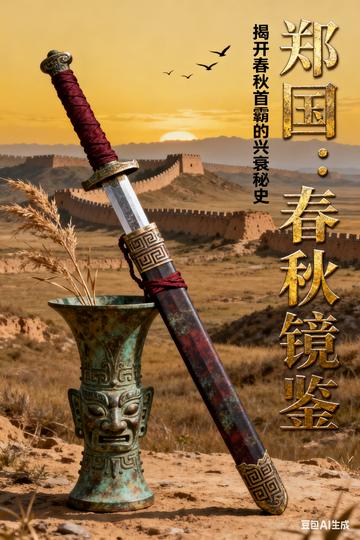
The four-hundred-year history of the rise and fall of the Zheng State is a concentrated reflection of the survival of small countries during the Spring and Autumn Period and the Warring States Period. It has experienced the glory of "Zheng Zhuanggong and the Little Tyrant", and the humiliation of "Chao Jin and Late Chu"; it has had virtuous prime ministers like Zichan who governed the country, and it has also experienced the chaos of Qi Mu's autocratic power.
Although the Zheng Kingdom was eventually destroyed by South Korea, the cultural legacy it left behind was far-reaching. The love poems in "The Book of Songs: Zheng Feng" have fascinated countless literati for thousands of years; Zichan's reform spirit became the forerunner of Legalist thought; the business tradition of Zheng's merchants laid the foundation for the commercial culture of the Central Plains.
By reading the history of Zheng, you can know the ups and downs; by understanding the history of Zheng, you can understand the gains and losses. This period of history is worthy of our careful savoring and thinking.
This book takes the twenty-one kings of the Zheng Kingdom as the main line and depicts the entire process from the rise to the decline of this ill-fated vassal state during the Spring and Autumn Period and the Warring States Period. The book contains not only the battles on the battlefield, but also the machinations and intrigues in the palace; the efforts of the monarchs and ministers to govern, and the struggle for power among the princes; the diplomatic maneuvers, and the brilliance of culture.
Although the Zheng State was eventually destroyed by South Korea, its four hundred years of rise and fall have become the epitome of the survival of small countries during the Spring and Autumn Period and the Warring States Period. One part is the history of Zheng, and half is the Spring and Autumn Annals. In this long scroll of history, we see not only the fate of a country, but also the rise and fall of that era.