They are just ordinary people. They don't know how to make sugar, dry fine salt, grow sweet potatoes, let alone fusels, Mauser, and artillery.
Reader comments
The process of "playing a bad card to make a big deal" is convincing. The author practices "respecting historical logic" every step of the way.
In terms of characters, the protagonist has no cheats. His fear, hesitation, and harshness are all grown out of the current situation. Even Yu Qian has the "limitations of a loyal minister" and is not like a tool man; the writing style is as simple as a memorial from the Ming Dynasty, and the dialogue is half-text and half-white but not separated. It reads like a yellowed newspaper, and there are bones in the elegance.
The plot ranges from the battle to defend the capital to the turmoil of Yi Chu, and then to the countdown to the goal. The situation is reversed almost every three chapters, but the situation is never broken by coincidence. The degree of restoration of historical figures is extremely high - Zhu Qizhen's weakness and unwillingness, Empress Dowager Sun's shrewdness and ruthlessness, and even Wala Yexian's nomadic thinking, all stick to the bones of "History of the Ming Dynasty". The best thing is the conflict resolution method: every crisis is not about being tough, but using interest exchange, time difference, and information asymmetry to dismantle it, like peeling an onion, exposing the core layer by layer. All strategies are based on the assumption that "everyone is a smart person". If the opponent does not reduce his intelligence, every step of the protagonist will make the reader break out in cold sweat - his IQ is so high that every line of dialogue is worth savoring.
When you close the book, you will believe that if a modern person really lived in Jingtai for eight years, he would probably be able to live like this.
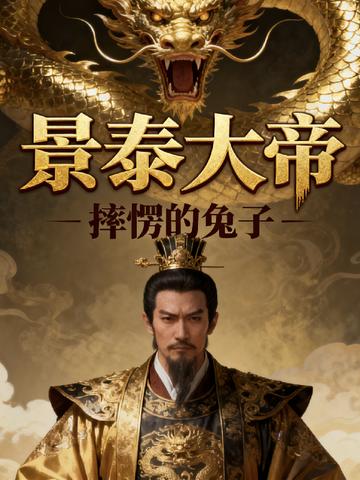
The process of "playing a bad card to make a big deal" is convincing. The author practices "respecting historical logic" every step of the way. In terms of characters, the protagonist has no cheats. His fear, hesitation, and harshness are all grown out of the current situation. Even Yu Qian has the "limitations of a loyal minister" and is not like a tool man; the writing style is as simple as a memorial from the Ming Dynasty, and the dialogue is half-text and half-white but not separated. It reads like a yellowed newspaper, and there are bones in the elegance. The plot ranges from the battle to defend the capital to the turmoil of Yi Chu, and then to the countdown to the goal. The situation is reversed almost every three chapters, but the situation is never broken by coincidence. The degree of restoration of historical figures is extremely high - Zhu Qizhen's weakness and unwillingness, Empress Dowager Sun's shrewdness and ruthlessness, and even Wala Yexian's nomadic thinking, all stick to the bones of "History of the Ming Dynasty". The best thing is the conflict resolution method: every crisis is not about being tough, but using interest exchange, time difference, and information asymmetry to dismantle it, like peeling an onion, exposing the core layer by layer. All strategies are based on the assumption that "everyone is a smart person". If the opponent does not reduce his intelligence, every step of the protagonist will make the reader break out in cold sweat - his IQ is so high that every line of dialogue is worth savoring. When you close the book, you will believe that if a modern person really lived in Jingtai for eight years, he would probably be able to live like this.