Stats
5.8Score
170Chapters
Tags
Synopsis
Reader comments
In booklists 4
The Best Historical Article on Tomato at Present, If You Don't Agree, Come and Argue
I want to read a book similar to "About the Southern Dynasty's Noble Young Master I Impersonated".
16MViews190Books5hUpdated

New Author (Warning! Don't Recommend the Works of Established Authors.)
Learn about under-the-radar authors.
4.1MViews316Books18hUpdated


Has Anyone Written Their Own Novel? Let Me Be Healthy?
Is there any? Is there any? ( ̄∇ ̄)Give me a look!
2.6MViews322Books8hUpdated

Help People Write Book Reviews for Free
I want to read a book similar to "Online Games: Reshaping Life". Help people write book reviews, no need to reply. Please add this book to your bookshelf and start updating here
201.2kViews409Books1dUpdated
As I read along, I felt that language is another highlight of this book. The author created a unique style of language that "blends white language with white language and is full of ancient meaning", which not only retains the conciseness and elegant charm of pre-Qin classical Chinese, but also ensures smooth reading for modern readers. He is particularly good at creating images: "The sound of the wind" symbolizes the original intention of the people, "embers and green bamboo slips" are a metaphor for the inheritance of civilization, and "the moon in the water" depicts the eternal nostalgia and alienation of the travelers." These images are used throughout, making the novel transcend the story level and possess poetic philosophical thinking and aesthetic value.
This book has a rich historical background, which is obviously different from the time-travel novels I have read before. Opening this book is like being immersed in history. The entire article not only restores the historical texture with rigorous textual research, but also gives the warmth of the times with literary creation. It is not difficult to see that the author has a deep understanding of history. I have deep attainments in history and culture, and respect both "reality" and "imagination." Therefore, I feel that this book is a very high-end historical novel that can not only satisfy my modern sense of "travel", but also make me familiar with history and learn culture during "travel".
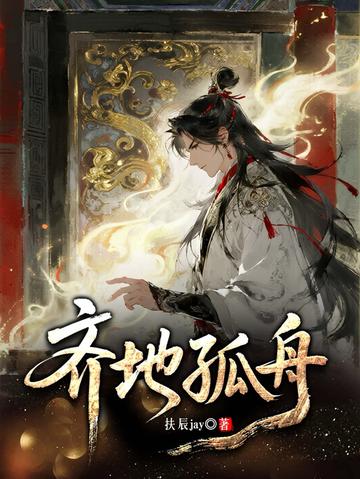
At a time when time-travel themes are becoming increasingly homogeneous, "A Boat on the Earth" bravely abandons all cheats and shortcuts, and throws the protagonist Tian Yan into the most real mud of the Warring States Period - where there is no overnight fame as a poet, no myth of gunpowder that turns stone into gold, but only food, land and the eternal problems in people's hearts. The author Jay Fuchen uses an astonishing sense of historical calmness and humanistic care to shift the focus of the narrative from the fantasy of "changing history" to the heavy steps of "carrying reality". Every tiny advancement - allowing the people to eat more, accomplishing something in a rotten system - requires the protagonist to use modern thinking to collide, compromise, and even adapt with scars. This is not the disillusionment of ideals, but the more tenacious heroism that still chooses to ignite the spark after recognizing the limitations. The book portrays a group of "fools" struggling in the cracks of the times. Their Long March did not have triumphant songs, but it was extremely solemn because of their stubbornness to guard the candle of civilization on a lonely boat that was destined to capsize. By touching the rough texture of history and the sharp edge of thought through words, the real traveler may not be the conqueror of history, but the messenger of civilization, even if he can only convey a glimmer of light.
I am obsessed with this work. The protagonist Tian Yan, a modern soul, wakes up as a royal nobleman in Qi State at the end of the Warring States Period. There is no system, no golden finger, only an imminent and known fate of national subjugation - Le Yi conquers Qi, more than seventy cities are destroyed, and Jimo is alone. But what the author did was "anti-routine", that is, depriving the time traveler of his "divinity". Tian Yan's little bit of modern knowledge pales in comparison to the real torrent of history. He didn't understand cold weapon warfare, couldn't make glass gunpowder, and even had to learn the writing and etiquette of this era from scratch. His greatest advantage may just be his ability to think and empathize with modern people that has not been fully assimilated by the times.
The most shocking thing about "A Boat on the Earth" is its profound spiritual core. The ultimate proposition it explores is: When personal ideals run counter to the current of the times, and when sober people face collective numbness and decay, how should they deal with themselves? Tian Yan's choice is: not to retreat. In the court, he acted as a "rebellious minister", admonishing against the current as an official. In the local area, he was a "doer", taking off his official robe and taking root in the barren land, starting from bricks and tiles, canals and crops. What he protects is not only the country of Qi, but also the "tinder of civilization" and "people's livelihood" in his heart. This Confucian spirit of "knowing that something cannot be done but doing it", and the courage to not give up in the face of an absolute power gap, together constitute the novel's melancholy and exciting tragic background. It does not give you illusory promises of victory, but gives you real and persistent value and strength.
A very novel novel, most of which are fictional time-travel novels from the Tang, Song, and Ming dynasties. It is the first time I have seen the historical time-travel in the pre-Qin period. Judging from the details of this book, the author has carefully studied this period of history and respects history. The protagonist has not cheated when he traveled to the past. The wheel of history is rolling forward, and the protagonist has become a volume of this history.