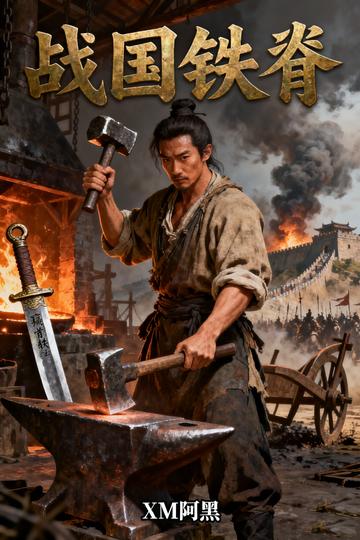
In 359 BC, the Qin State's new law was first implemented, and undercurrents surged in Xianyang City. Ying Tie, the son of a blacksmith, rose to prominence in the government's smelting and casting bureau by relying on his family's secret art of softening cast iron. However, because he created an iron sword that far exceeded the standard, he was involved in a life-and-death game between the old aristocracy and the reformists. When he cut through the smoke of the Hexi battlefield with the ring-shou knife forged by the steel-filled method, and when the improved curved shaft plow set off waves of wheat in the Guanzhong Plain, this young man who was once ridiculed as a "base metal" would eventually use iron as his backbone to hold up the banner of the Great Qin Dynasty. From Xianyang Workshop to Hangu Pass, from Jixia Academy to Chuying Deep Palace, he held a hammer in his left hand to forge sharp weapons, and held a sword in his right hand to strike and close. Amidst mountains of corpses, seas of blood, and whirlpools of intrigue, he witnessed the rise of an Iron Age and created a legend of the Warring States Period that belongs to craftsmen.