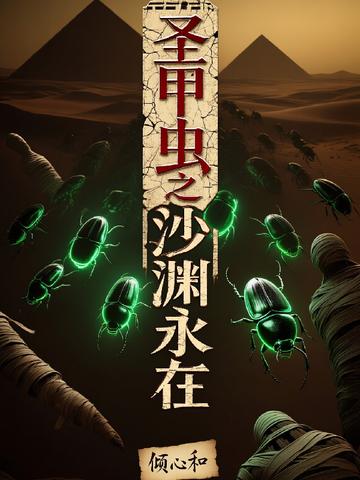
A Curse of Sand Across a Century: Archaeologist Laila Harris's Ultimate Nightmare
In 1922, deep inside a tomb on the Giza Plateau, young archaeologist Laila Harris watches as her assistant Billy touches a mysterious black obsidian scarab known as the Eye of Apep. His body crumbles into pale gray dust beneath an eerie green light. At the same time, as the earth rumbles like its own innards are churning, sticky black sand pours from the scarab, thick as tar, and the ancestral archaeological hammer at Laila's waist mysteriously vanishes into thin air. Fear and the whisper of a curse, “The sands of time are thirsty,” brand themselves into the depths of Laila's soul.
Time jumps to 2024. Now a professor, Laila carefully studies the same scarab, named the Eye of Apep, in a state-of-the-art dome laboratory. Under the cold instruments, the evil artifact recreates the scene from a century ago: lethal black droplets ooze from the edges of its compound eyes and trickle down! This venomous spittle across time heralds the curse's awakening. Worse still, the missing archaeological hammer falls into a Cairo market, where a dying boy picks it up. Ancient bloodstains on the handle meet the boy's despair, and visions from the scarab's compound eyes imprint themselves directly on his mind, compelling him to mutilate himself with the hammer as a sacrifice. His unbearable pain and fading life unexpectedly become blood offerings that nourish the evil artifact, causing the scarab's power to surge.
Laila soon discovers in horror that she is not merely a witness to the curse, but its very vessel! The old scar from the tomb a century ago begins to seep the same black sand. A scan reveals that her spine is transforming into a column of flowing sand: a passage the sands of time are burrowing through her body! The scarab