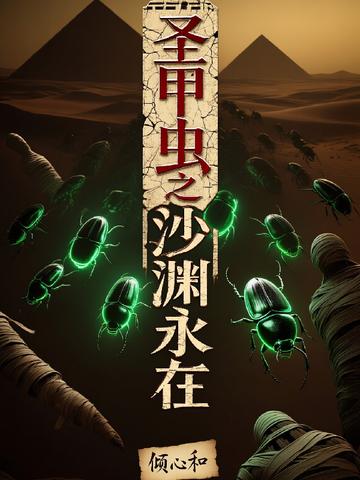
The Curse of Sand Across Centuries: Archaeologist Leila Harris' Ultimate Nightmare
In 1922, in the deep tombs of the Giza Plateau, young archaeologist Leila Harris witnessed the moment when her assistant Billy touched the mysterious obsidian scarab "Eye of Apep" - his body collapsed into gray sand under the evil green light. At the same time, accompanied by the earth's visceral buzzing, scarabs exuded jet-black fine sand as thick as asphalt, and the ancestral archaeological hammer on Laila's waist mysteriously disappeared out of thin air. Whispers of fear and curse - "The sands of time are thirsty" - are seared into the depths of Lyra's soul.
Time jump to 2024. Laila, who has become a professor, is carefully studying the same scarab named "Eye of Apep" in the cutting-edge dome laboratory. Under the cold instrument, the evil thing reappeared a hundred years ago: deadly black droplets seeping and snaking from the edge of the compound eye! This poisonous saliva that spans time and space is the announcement of the awakening of the curse. What's even more terrifying is that the missing archaeological hammer fell into the Cairo market and was picked up by a dying teenager. The ancient blood stained on the handle of the hammer merged with the boy's despair, and the illusion of the scarab's compound eyes was directly burned into his mind, forcing him to sacrifice himself with the hammer. This extreme pain and loss of life unexpectedly became blood food that nourished the evil creature, and the scarab's power increased dramatically.
Laila soon discovered to her horror that she was not only a witness to the curse, but also its core carrier! The old scars left in the tomb a hundred years ago began to ooze out the same black sand. Under the scan of the instrument, her spine was being transformed into a flowing pillar of sand - a channel dug by the sand of time in her body! Scarab