"Silence" takes Japan's defeat in 1945 as its starting point, focusing on the escape and survival process of Japanese soldiers Sato, Miyamoto, and Yamada, and showing the struggles and fate of small people under the trauma of war.
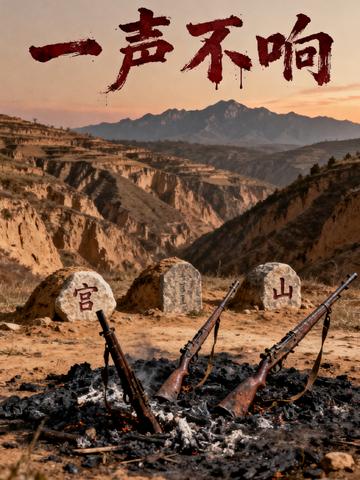
On the night of the defeat, the three men fled the battlefield with three rifles and escaped into the mountains of northwest Shanxi. From first hiding from artillery fire in trenches and eating compressed biscuits to satisfying their hunger, to digging caves and nests in the mountains and forests, and setting traps for hunting, they hibernated with difficulty amid hunger, severe cold, and the threat of pursuing soldiers. During this period, crises such as food shortages, disease, and ammunition exhaustion came one after another. Miyamoto died of worsening lung disease, and Yamada died in a landslide caused by heavy rain. Only Sato was left guarding the cave dwelling, rifle, and two tombs, and made a living by picking up rags in loneliness.
In the end, the old Sato lit the cave dwelling and burned it to ashes along with the three rifles and the relics of his companions, using his life to complete the ultimate farewell to the promise of "going home". The novel depicts the devastation of war on individuals in a delicate way. Through the three people's forty-five years in the mountains, it explores the heavy propositions of survival and dignity, loneliness and bondage, leaving a long aftertaste of reflection on the war.
Written with flesh and blood