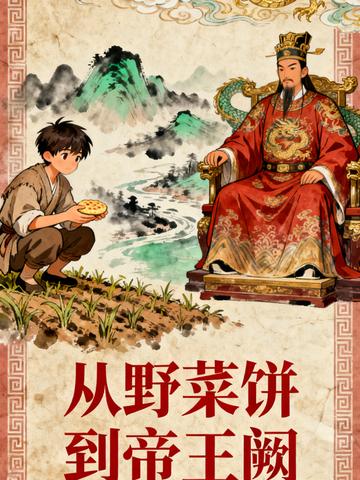
Introduction to the novel "From Wild Vegetable Cake to Imperial Palace"
On the way to escape from famine, refugees Shen Yan and Su Qingyuan bonded over half a piece of wild vegetable cake. One carries a system that can unlock food for survival and a template for governing the country, and the other carries fragments of memories about education and people's livelihood in their previous lives. Starting from one-third of an acre of land in Qingniu Valley, they promoted high-yielding grain varieties to keep the refugees fed, built simple schools to enlighten children, and gradually gained a foothold in troubled times.
After Shen Yan ascended the throne as emperor and Su Qingyuan was enthroned as empress, the two did not forget the hunger and cold and the suffering of the refugees when they fled famine, and implemented a new policy with the original intention of "putting the people first": Shen Yan used the systematic water conservancy template to manage the Yellow River In the face of floods, he reformed the imperial examination to break the shackles of family background, allowing children from poor families to have the opportunity to enter the court; Su Qingyuan taught women survival skills to women in the harem, integrated past life experience into people's livelihood management, and promoted equality between men and women.
From the years of exile when they ate wild vegetable cakes to the prime years when they were sitting in the palace of the emperor, they always used the half piece of wild vegetable cake as a reminder, adhered to meritocracy in the court, and practiced living and working in peace and contentment among the people. In the end, the Dajing Dynasty ushered in the grand scene of He Qinghaiyan, and the "original intention in the wild vegetable cake" became the warmest imprint of governance engraved on the emperor's palace.