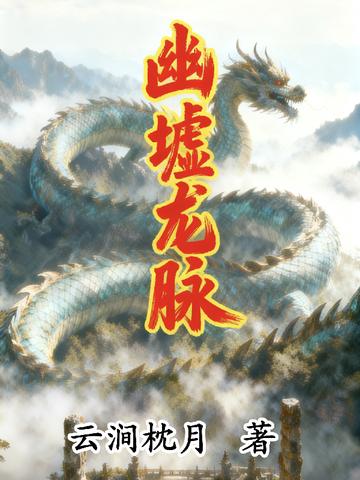
In the summer of 1985, a thunderstorm washed away Mang Mountain in Luoyang. Qi Yuanzheng, who had just been released from prison, returned to his old house and was faced with a volume of "Mausoleum Genealogy Dunjia Plate" soaked in the blood of his ancestors and a cold mountain-closing order. The bronze compass pointer in his hand was spinning backwards and forwards—called the "reversal of yin and yang" in Tianxing Feng Shui, which indicated that a strange change was taking place in a sleeping imperial mausoleum.
At the same time, in the restoration room deep in the Forbidden City, young expert Lin Wanqiu was looking at a Tang Dynasty sea beast grape mirror. When the light of the stars and the moon shines on the mirror through the window lattice, a top-secret "Huang Chang Ti Cou" structural diagram is projected on the wall, with the coordinates pointing directly to the military restricted area deep in the Helan Mountains. In the Panjiayuan Ghost Market in Beijing, the thin monkey known as "Master Hou" has just exchanged three bottles of Erguotou for a Hun gold crown. This gold crown will emit ethereal chimes every midnight, and float out the thousand-year-old Xixia text "Burial of the Stars"...
The thread of fate entwines four people: Qi Yuanzheng, who masters the secrets of scientific archeology and gold-touching, Lin Wanqiu, who can identify ancient objects, Shouhou, who carries the inheritance of Guanshan Taibao, and Ma Sangu, a descendant of Faqiu who is proficient in Qimen Dunjia. They ranged from the quicksand traps in the Western Xia Royal Tombs to the millennium poisonous poisons in the Insect Valley in southern Yunnan; from the Ming Dynasty shipwrecks on the seabed of Youzhou to the ancient ice city in the Kunlun Snow Mountains. Every time they escape death, they get closer to an astonishing truth - the tombs of emperors of past dynasties are actually the seven giant dragon-veined locks that suppressed Chinese civilization.