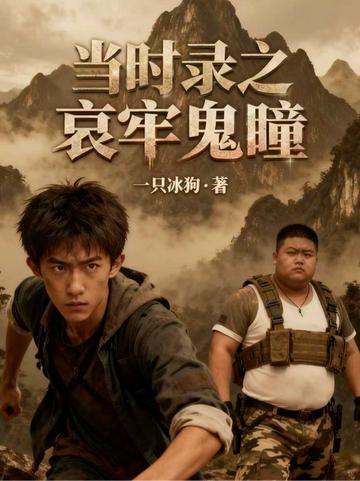
Song Jin is a history graduate student about to finish his degree. He’s long been haunted by his great-grandfather’s dying words: “The tombs in western Yunnan must not be disturbed.” The sand in the coffin at Black Sand Valley, the bone-devouring gu worms, and half of a bloodstained bronze fragment from that year have become taboos that three generations of the Song family have dared not touch.
Then, after finding a bronze mirror engraved with a deer pattern on the hill behind his school, strange events begin one after another: the bronze surface grows hot in the middle of the night, a snake-shaped red mark appears on his wrist and won’t fade, and black sand mysteriously turns up in front of Professor Chen’s grave. What frightens him most is that the mirror is identical to the “Dian Kingdom burial object lost in the Min Guo era in a fire at the Shazi mines” mentioned in his great-grandfather’s notes.
To uncover the truth, he brings along his childhood friend Lu Xiaopang, heir to the Lu Hai Cang Zhen antiques shop. The chubby kid is greedy and never stops talking, but he always knows what to do when it matters. Following the clues, they head for Cangshan in Yunnan. Strange events keep unfolding along the way: a bronze pillar at the Panzhihua mine that “swallows people,” a wooden carving in a Dali general store whose patterns match those on the mirror, a mysterious old man who guides them through the fog while hiding the secret of a severed finger, and the words they keep hearing: “There’s fog on Cangshan. Watch the sand beneath your feet.”
They don’t know that the moment they touched the mirror, they stepped into a scheme spanning four generations. The gu tomb that their great-grandfather and Lu Xiaopang’s great-grandfather excavated, the map of Mount Cangshan that Professor Chen drew before he died, and the bronze box in Nine Fingers’ possession, which comes from the same source as the Song family’s compass, all point to the Dian King’s tomb deep in the Ailao Mountains. The bronze mirror is both the key to opening the Mu Cave and a token used by a mysterious organization to select its “heirs.” Founded by Tang dynasty seekers of alchemical formulas, the organization’s two factions have fought for a thousand years. One helps those in power seize the dragon veins and their vital energy; the other protects the natural order.