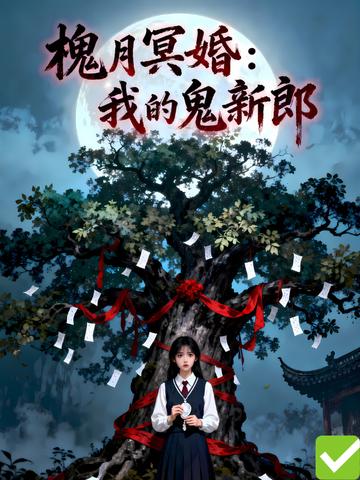
Folklore student Su Wan rented a house in an old community, but was haunted by the nightmare of a ghost marriage under the locust tree - a man in a shroud, bleeding yellow paper, and a coffin with a red circle on the calendar, which frightened her every night. The silver hairpin passed down by my great-grandmother beside the pillow glows with cold light, and it has the same pattern as the relics of Ayao, the "ghost bride" in the Republic of China.
Her best friend Xia Zhi accompanies her in the investigation, and the truth is gradually revealed through Grandma Zhang's folklore stories, "Ghost Marriage Test" in the second-hand bookstore, and the fragments of the Lu family ancestral hall: Su Wan is the great-granddaughter of A Yao's sister, the silver hairpin is one of the "twin jewels" split by A Yao, and the "ghost groom" in the dream, Lu Ziming, is a young master of the Republic of China who was killed by his uncle Lu Changye, and his resentment has been trapped in a locust tree for hundreds of years.
Ayao's old handkerchief was embroidered with an unfinished lotus flower, and her needlework basket contained a birthday note for her daughter. These relics guided Su Wan to search for her other half, the soul-soothing bead, and the Lu family tree. From Huaian Lane to Shen Garden, from the Qingming Festival to the Dragon Boat Festival Sachet, Su Wan understood Ayao's concern among old things and solar terms and folk customs - not asking for her life, but looking for future generations to resolve a century-old knot and help Lu Ziming put aside his grievances.
When the twins came together, Lu Changye's conspiracy was revealed, and the resentment under the locust tree turned into the fragrance of locust flowers. Su Wan finally understood that this "dark marriage nightmare" was originally an affectionate trust that spanned a hundred years. It was the warmth of the world hidden in folk customs. Generation after generation, the warmth was passed down with memory and love.