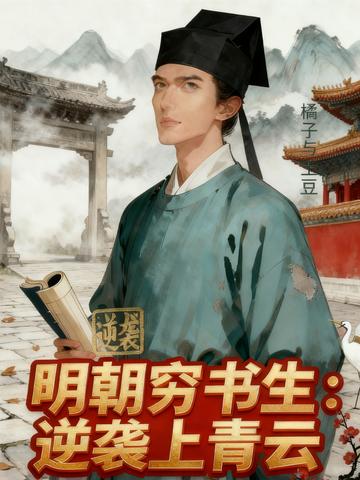
The Poor Scholar of the Ming Dynasty: Counterattack to the Qingyun
明朝穷书生:逆袭上青云
- Status
- Ongoing
- Length
- 770k Words
- Genre
- Historical
- Subgenre
- Historical & Ancient
- Audience
- Male
- Updated
- 9mo ago
- Source
- Fanqie
Stats
3Reads
179Chapters
2.9kReads · all time
Tags
Synopsis
Reader comments
In booklists 4





Well, Yes, Click Here to Take a Look
I want to read a book like "Drinking Mixture and Holding a Knife, I'm the Most Slutty in the World". Are there any books with male protagonists? If you don't open a harem and have three correct views, it's similar to Shenhao, where weirdness comes, and the male protagonist is cheated. The writing style should be good, and there should be no female protagonist. If it is a two-male protagonist
4.2kViews104Books10moUpdated


Friends, Please Recommend Some Good Historical Novels.
I want to read a book similar to "Making the Surname Langya". Are there any historical novels as good as Mao's Surname: Langya?
3.5kViews101Books8moUpdated




Good Book, Read It Several Times. Can Learn a Lot
I would like to read a book similar to "Record of Destiny Change".
3.1kViews56Books10moUpdated



Recommend Yourself, Everyone Is Welcome to Comment
I want to read a book similar to "No Control of Everything".
1.2kViews64Books10moUpdated
Use the pen as a sword to defeat the Qingyun——Comment on "The Poor Scholar of the Ming Dynasty: Counterattack on the Qingyun" In the stereotyped narrative that it is difficult to produce a noble son from a poor family, "Poor Scholars of the Ming Dynasty: Counterattack to the Qingyun" uses the imperial examination system of the Ming Dynasty as the warp and weft to weave a history of the struggle of small people with both historical depth and exciting tension, making "counterattack" no longer a suspended fantasy, but a tenacious pursuit rooted in the soil of the times. The subtlety of the novel lies in the deep binding of the protagonist's counterattack with the social fabric of the Ming Dynasty. The starting point of a poor scholar is not a general "poverty", but a concrete survival dilemma: the hardship and embarrassment on the way to the imperial examination, the oppression and difficulties of the local gentry and the evil gentry, and the undercurrent of officialdom rules. The author's detailed description of the imperial examination process in the Ming Dynasty - from the tense atmosphere of the county examination to the emperor's inquiries in the palace examination, from the art of creating eight-part essays to the management of teachers' connections, not only restores the true texture of historical details, but also makes every promotion full of logical and self-consistent difficulties and difficulties. This kind of respect for the rules of the times allows "Counterattack" to get rid of the cheap halo of Goldfinger and become the inevitable result of the protagonist relying on his talent, resilience and wisdom to work step by step within the established framework. The three-dimensionality of character creation is another highlight of the work. The protagonist is not a perfect "counterattack template". He has been confused about reality, struggled with the bottom line, and even experienced the pull of ideals and compromises in the ups and downs of officialdom. This complexity of human nature makes the character break out of the flat routine of "a cool protagonist" and become more like an ordinary person struggling to steer the tide of the times. The supporting characters surrounding the protagonist are equally vivid: a poor classmate who provides help in times of need, a clean official who is both a teacher and a friend, and a sanctimonious officialdom veteran. Each character carries a specific symbol of the times, and together they form a microcosm of Ming Dynasty society. On a deeper level, the novel uses the protagonist's counterattack to explore the true connotation of "knowledge changes destiny" in the feudal era. It does not deliberately deify the imperial examination system, but objectively presents the power game and class solidification behind it. At the same time, through the persistence of the protagonist, it proves that talent and conscience have the power to penetrate barriers in any era. This kind of dialectical thinking about history and human nature makes the work not only satisfy readers' reading pleasure, but also has a thought-provoking spiritual depth. For readers who love historical novels and counterattack themes, "The Poor Scholar of the Ming Dynasty: Counterattack on the Clouds" is not only a hearty feast of struggle, but also an immersive social tour of the Ming Dynasty. It allows us to see that no matter how the times change, the little people's struggle against fate and persistence in their ideals will always have the power to move people's hearts.
Beautifully written
Not bad, good writing!
The content is very pragmatic, the plot is fascinating, and the presentation shows the author's skill. It is a very good imperial examination novel.
There are too many adjectives, which reflects the thinness of the plot.